

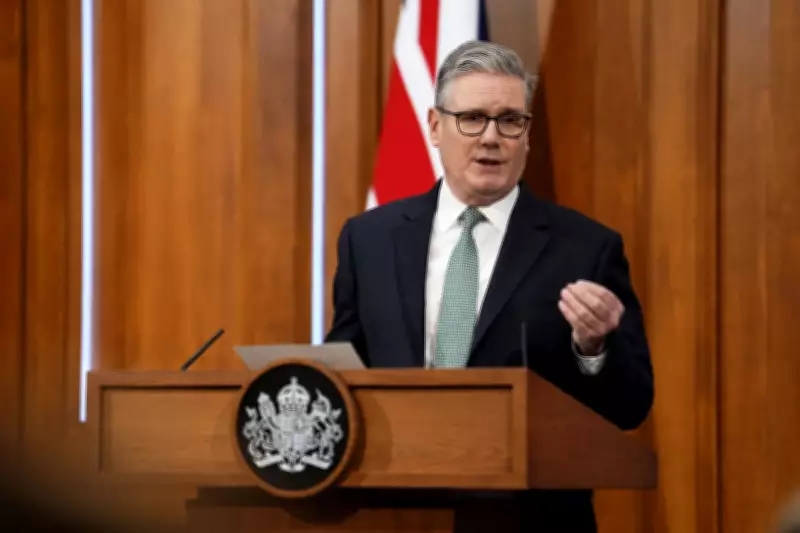
British Prime Minister Keir Starmer has delivered a clear and direct message as he commenced a significant diplomatic visit to Beijing, marking the first trip by a UK premier to China in eight years. "Like it or not, China matters for the UK," Starmer stated emphatically, advocating for a long-term, consistent, and comprehensive strategic partnership between the two nations.
A Call for Strategic Consistency
In a pre-visit statement, Starmer highlighted the historical inconsistency in Britain's approach to China, describing it as fluctuating between periods of warm engagement and cold distance. "For years, our approach to China has been dogged by inconsistency – blowing hot and cold, from Golden Age to Ice Age," he remarked. The Prime Minister emphasized that engaging with China aligns firmly with Britain's national interests, even as differences between the countries persist.
Starmer, accompanied by a substantial 60-member delegation comprising business leaders and cultural figures, articulated his vision for pragmatic cooperation. "As one of the world's biggest economic players, a strategic and consistent relationship with them is firmly in our national interest," he explained. "That does not mean turning a blind eye to the challenges they pose – but engaging even where we disagree."

Global Context of Trade Uncertainty
The visit occurs against a backdrop of significant global trade disruptions, primarily driven by aggressive tariff measures from US President Donald Trump. These sweeping trade penalties have unsettled allies and rivals alike, disrupting global supply chains and creating widespread economic uncertainty. As Washington adopts a more inward-looking stance, several Western nations are reassessing their economic strategies and international partnerships.
Starmer's outreach to China reflects a broader realignment taking place across Western nations. He becomes the fourth leader from a US ally to visit Beijing this month, following counterparts from South Korea, Canada, and Finland, with Germany expected to follow suit. These diplomatic movements signal a growing recognition that China remains central to global trade networks, investment flows, and supply chain operations, regardless of ongoing political tensions.
Downing Street's 'Clear-Eyed' Approach
The UK government has characterized its China policy as "clear-eyed and realistic," emphasizing cooperation in areas of mutual benefit while maintaining firm safeguards on national security matters. This balanced approach acknowledges China's economic significance while addressing strategic concerns.
For Britain, China represents its third-largest trading partner, supporting approximately 370,000 jobs across various sectors. Starmer's message underscores not alignment with Beijing, but rather a pragmatic realism in navigating a rapidly evolving global landscape characterized by tariff conflicts, shifting alliances, and strategic recalibrations.
Washington's Discomfort with Allied Outreach
President Trump has repeatedly expressed irritation when US allies pursue closer economic engagement with China. Earlier warnings to Canada regarding its outreach to Beijing reflect Washington's unease as partners seek to diversify their economic relationships amid trade volatility and geopolitical changes.
Trump recently cautioned Canada and Prime Minister Mark Carney against making trade agreements with China, threatening to impose 100 percent tariffs if such deals materialized. "If Governor Carney thinks he is going to make Canada a 'Drop Off Port' for China to send goods and products into the United States, he is sorely mistaken," Trump declared on his Truth Social platform.
In response to these threats, Carney encouraged Canadian citizens to support domestic businesses through a new "Buy Canadian" policy. While Trump has not specifically commented on Starmer's current visit, the broader pattern indicates that Western allies are adapting to a global environment where US economic predictability can no longer be assumed.

Strategic Recalibration in Uncertain Times
Starmer's diplomatic mission represents more than bilateral engagement; it symbolizes a strategic recalibration as nations navigate an increasingly fragmented global economy. The Prime Minister framed his approach as delivering practical benefits for British citizens. "This is what our allies do, and what I will do: delivering for the public, putting more money in their pockets and keeping them safe through pragmatic, consistent cooperation abroad," he stated.
The visit underscores several critical developments in international relations:
- Economic Interdependence: Despite political differences, economic realities continue to drive diplomatic engagement between major powers.
- Western Realignment: Multiple US allies are independently strengthening ties with China, reflecting diversified foreign policy approaches.
- Trade Policy Impacts: Aggressive tariff measures from the United States are prompting nations to reassess their economic partnerships and strategic options.
- Pragmatic Diplomacy: Starmer's emphasis on "consistent cooperation" highlights a shift toward practical engagement over ideological positioning.
As global trade dynamics continue to evolve, Starmer's China visit represents a significant moment in Britain's post-Brexit foreign policy, balancing economic interests with strategic considerations in an increasingly complex international landscape.





