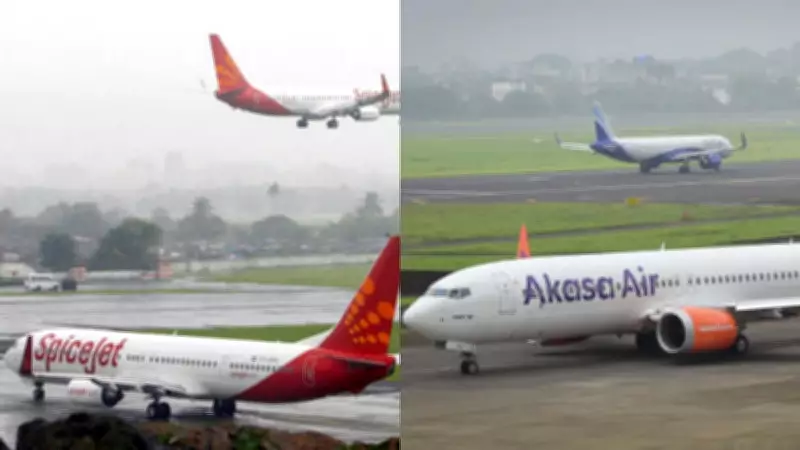
SpiceJet and Akasa Air Aircraft Collide During Taxiing at Delhi Airport
A ground collision occurred at Delhi's Indira Gandhi International Airport involving two commercial aircraft, resulting in significant damage to both planes. The incident took place on April 16, 2026, when a SpiceJet Boeing 737-700 was taxiing on the tarmac and made contact with an Akasa Air jet.
Details of the Airport Ground Incident
The SpiceJet B737-700 aircraft was involved in what aviation authorities term a "ground occurrence" while it was maneuvering on the airport's taxiways. This led to a direct impact between the two aircraft, causing structural damage.
Specific damage assessments reveal that the SpiceJet plane suffered harm to its right winglet, a critical component at the tip of the wing designed to improve aerodynamic efficiency. Simultaneously, the Akasa Air aircraft sustained damage to its left-hand horizontal stabilizer, an essential part of the tail section that provides stability during flight.

Immediate Aftermath and Safety Protocols
Initial reports confirm that no passengers or crew members were injured in this taxiing collision. Airport emergency response teams were promptly dispatched to the scene to secure the area and assess the situation. Both aircraft have been taken out of service for thorough inspections and necessary repairs.
Aviation safety experts emphasize that such ground incidents, while rare, require meticulous investigation to prevent future occurrences. The Directorate General of Civil Aviation (DGCA) and other relevant authorities have launched an inquiry into the exact circumstances that led to this collision.
Operational Impact and Industry Response
The collision has temporarily affected flight operations for both SpiceJet and Akasa Air at Delhi airport, one of India's busiest aviation hubs. Airlines have implemented contingency plans to minimize disruption to passengers, including rebooking on alternative flights.
This incident highlights the challenges of managing ground movements at congested airports and underscores the importance of stringent taxiing procedures and enhanced communication between ground control and flight crews.