

Regime Reshuffle in South Asia: Myanmar, Bangladesh, Nepal's New Political Orders
While global attention remains fixed on West Asia, a significant political transformation has quietly unfolded in South Asia over the past three months. Three neighboring nations—Myanmar, Bangladesh, and Nepal—have undergone dramatic regime resets, each with distinct characteristics and implications for regional stability.
Myanmar's Military-Dominated Transition
The political landscape in Myanmar has taken a definitive turn toward military control. Following the 2021 coup that ousted Aung San Suu Kyi's National League for Democracy (NLD), the country has endured a prolonged civil war. Ethnic Armed Organizations (EAOs) and the National Unity Government (NUG) continue to challenge the junta's authority, with the military currently controlling approximately 60% of the territory.
The recent electoral exercise, orchestrated by General Min Aung Hlaing after considerable delay, saw the Union Solidarity and Democratic Party (USDP) secure around 80% of seats in both parliamentary houses. This dominance will be further reinforced by constitutional provisions mandating that 25% of members come from security forces.

Turnout for these elections reached approximately 55%, significantly lower than the 70% participation recorded in 2020. Notably, elections could not be conducted in 67 towns due to security concerns. While eight countries, including India, sent observers, both the European Union and ASEAN have refused to endorse the electoral process.
India faces multiple challenges in Myanmar: maintaining relations with the new regime while acknowledging the diminished role of Aung San Suu Kyi, countering China's substantial influence over the Tatmadaw, and securing critical infrastructure projects like the Kaladan Multi-Modal Transit Transport Project through negotiations with rebel groups controlling Arakan state.
The recent apprehension of foreign mercenaries—one American and six Ukrainians—involved in drone supply and training missions highlights the potential for conflict spillover into India's northeastern states of Mizoram and Manipur, underscoring the urgent need for enhanced surveillance and intelligence networks.
Bangladesh's Political Reversal
Bangladesh has experienced a dramatic political shift following widespread violent protests against the Sheikh Hasina regime in August 2024. The subsequent installation of an interim government marked a significant setback for India, particularly given the anti-India bias displayed by de facto head Mohammed Yunus.
The Bangladesh Nationalist Party (BNP), led by Tarique Rahman returning from 17 years in exile, secured a commanding victory with 211 out of 300 parliamentary seats (70%). This outcome occurred with the Awami League banned and Sheikh Hasina in exile. The 50 seats reserved for women will be distributed proportionally.
While Jamaat-e-Islami achieved its highest electoral tally with 68 seats, their concentration along western and northern borders raises security concerns. The student-led National Citizens Party managed only six seats.
Positive developments include: Prime Minister Tarique Rahman's reassuring statements toward India, his condemnation of Pakistan Army actions during Operation Searchlight (1970–71), and a comprehensive military reshuffle that has replaced key figures including the all-powerful Lt Gen Kamrul Hasan.
However, challenges persist with legacy issues like the Farakka barrage, stalled projects, infiltration, transit disputes, and cattle smuggling. India must navigate growing radicalism while avoiding pushing Bangladesh toward becoming another Pakistan through stereotyping.
Nepal's Youthful Political Revolution
Nepal's elections have produced the most dramatic change, with the newly formed Rashtriya Swatantra Party (RSP) securing a decisive mandate of 182 out of 275 parliamentary seats and 48% of the popular vote. This outcome represents a clear rejection of traditional parties and leaders, including India-baiter Sharma Oli, who now faces arrest.

The new government features 37% of parliamentarians under age 40, reflecting a significant generational shift. With 8 million new voters and 59% turnout, Nepal combined elections in 165 constituencies with 110 seats allocated through proportional representation.
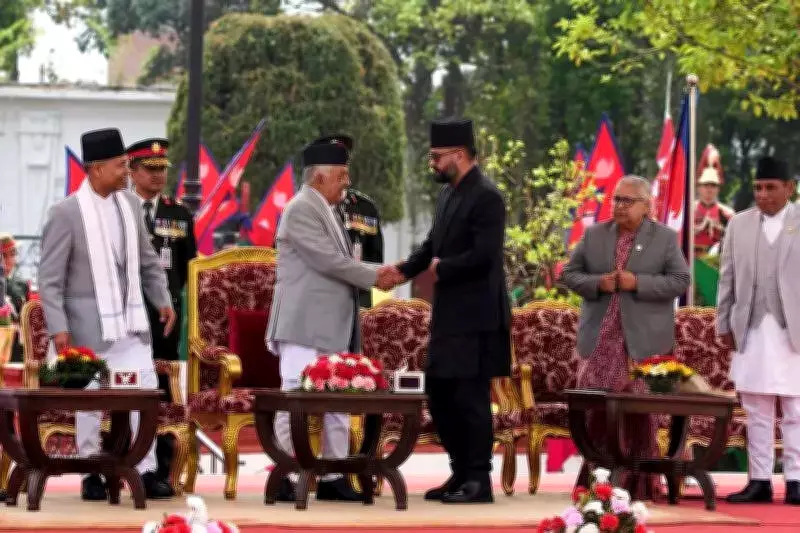
Prime Minister Balendra Shah—a Madheshi structural engineer, rapper, and former Kathmandu mayor—has assembled a cabinet of respected professionals. Credit is also due to interim Prime Minister Sushila Karki, former Chief Justice of Nepal, for ensuring stability during the transition period.
India's priorities in Nepal include: resolving cartographic disputes around Kalapani and revitalizing joint hydropower projects like Arun-3 to enhance clean energy production and grid connectivity.
Strategic Implications and Way Forward
Each of these regime changes presents unique challenges for India's foreign policy. Myanmar requires pragmatic engagement with military authorities while managing rebel groups and Chinese influence. Bangladesh demands careful navigation of political realignments and radicalization concerns. Nepal offers opportunities for renewed partnership with a youthful, reform-oriented government.
The common strategic challenge across all three nations remains navigating China's expanding footprint and growing American influence. India must develop nuanced, country-specific approaches that acknowledge these new political realities while advancing its regional interests through diplomatic, economic, and security cooperation.
The author is former GOC-in-C of Western Command, Indian Army.





