The Quiet Alliance That Preceded Maduro's Dramatic Fall
The capture of Venezuela's Nicolás Maduro by United States forces in early January appeared to mark the definitive end of a turbulent chapter characterized by years of economic sanctions, diplomatic threats, and ultimately failed negotiations. However, what unfolded as a sudden military operation was actually preceded by months of clandestine diplomacy that would reshape Venezuela's political landscape.
Secret Communications Begin Amid Growing Uncertainty
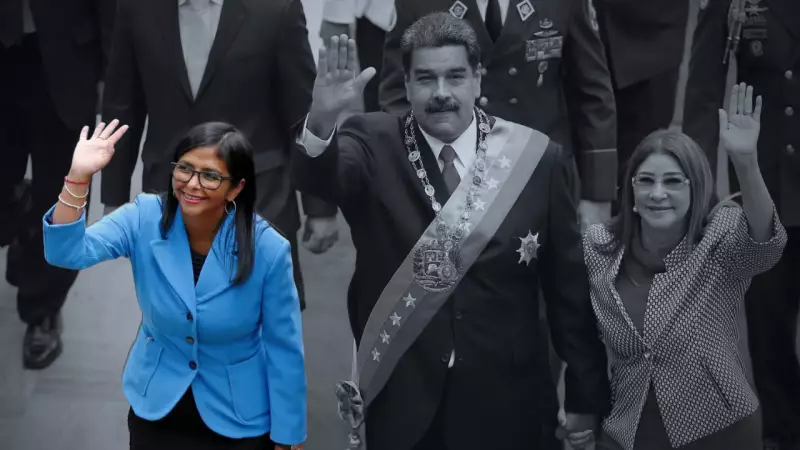
According to detailed reporting by The Guardian, the groundwork for Maduro's removal began taking shape in November 2025, approximately two months before the dramatic capture operation. At that critical juncture, Venezuela's interim president Delcy Rodríguez and her brother Jorge Rodríguez, who headed the national assembly, established a secret backchannel with American officials.
These covert communications coincided with direct conversations between then-US President Donald Trump and Maduro himself, during which Trump reportedly urged the Venezuelan leader to step aside voluntarily. When Maduro refused this diplomatic overture, it set in motion the events that would culminate in his forceful removal from power.

Delcy Rodríguez's Calculated Positioning
As political uncertainty intensified in Venezuela, Delcy Rodríguez increasingly signaled to her American contacts that Maduro's removal had become necessary for the country's future. She positioned herself as willing to manage what she described as a "post-Maduro transition," arguing that a controlled handover would prove far preferable to complete state collapse.
"Delcy was communicating 'Maduro needs to go.' She said, 'I'll work with whatever is the aftermath,'" one contact familiar with the discussions told The Guardian. This messaging reflected her careful calculation that Venezuela required leadership change while maintaining some institutional continuity.
Washington's Evolving Perspective on a Regime Insider
Despite her senior position within the Maduro administration, Delcy Rodríguez gradually gained credibility with key figures in Washington. Initially, US Secretary of State Marco Rubio expressed skepticism about relying on someone so deeply embedded in the regime structure. However, he reportedly came to view Rodríguez's assurances as the most viable pathway to prevent complete state failure while maintaining basic stability.
Additional factors strengthened her position with American officials. Rodríguez signaled readiness to collaborate with US energy interests and maintained connections within Venezuela's crucial petroleum sector, which reportedly reassured Trump administration figures concerned about economic stability and resource access.
Qatar's Crucial Mediation Role
The backchannel negotiations received significant international support from Qatar, which played a pivotal role in facilitating the delicate talks. Delcy Rodríguez maintained close ties with Qatari officials, and Doha leveraged its diplomatic influence in Washington to support and legitimize the covert communication process between the parties.
Notably, Rodríguez did not agree to actively participate in Maduro's direct removal. Instead, she and her brother carefully positioned themselves to manage the political situation once he was no longer in power. One official familiar with the discussions revealed to The Guardian that Delcy "feared him" and deliberately avoided any overt betrayal before his actual fall from authority.
The Transition Unfolds
When US aircraft arrived in Venezuelan airspace in early January, Delcy Rodríguez disappeared from public view. While rumors circulated suggesting she had traveled to Moscow, The Guardian reports she was actually on Margarita Island, awaiting developments and preparing for the transition she had discussed with American officials.
On January 5, she returned to Caracas and was formally sworn in as acting president to replace the captured Maduro. Her brother Jorge Rodríguez simultaneously assumed a central role in governance, reflecting the transition framework that had reportedly been discussed during the secret negotiations months earlier.

Trump's Post-Capture Confirmation
Hours after Maduro's capture, President Trump appeared to confirm that backchannel contacts had indeed taken place. "We've spoken to her numerous times, and she understands, she understands," he told the New York Post, providing public acknowledgment of the previously clandestine communications.
Broader Context of US-Venezuela Confrontation
The United States had engaged in months of military actions targeting Venezuelan assets before the capture operation. President Trump had long accused Maduro of presiding over what he described as a corrupt narco-state that enabled large-scale drug trafficking operations directed at the United States.
Since September, US forces had intercepted and destroyed multiple vessels in the Caribbean that Washington identified as part of Venezuela-linked smuggling networks. Throughout his term, Trump also publicly rejected the legitimacy of Maduro's 2018 re-election, consistently asserting that the vote was fraudulent and that the Venezuelan leader lacked a genuine democratic mandate.
The dramatic capture operation and the political transition that followed thus represented the culmination of both overt pressure and covert diplomacy—a complex interplay of military action and backchannel negotiations that reshaped Venezuela's political future.