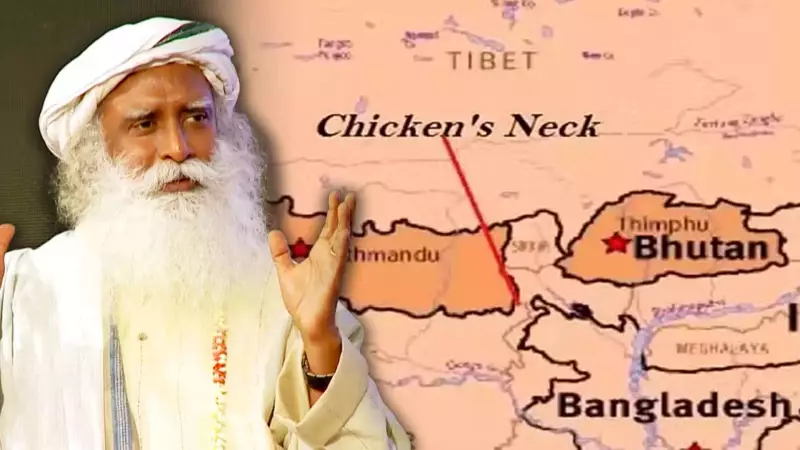
Spiritual leader and visionary Sadhguru has issued a stark warning about a critical geographical vulnerability of India. He has identified the narrow Siliguri Corridor, often called the 'Chicken's Neck,' as a symbol of the nation's strategic fragility that requires urgent and decisive action to fortify.
A Historical Mistake Uncorrected
Sadhguru emphasized that this slender strip of land, which connects India's northeastern states to the mainland, represents a historical error. He pointed out that this flaw was left unaddressed even after India's decisive victory in the 1971 war. The spiritual leader argued that a nation cannot safeguard its territorial integrity from a position of weakness. He cautioned against imposing borderless ideals prematurely in what remains a dangerous and unpredictable world.
Growing Threats in the Region
The remarks come at a time of heightened concerns in the immediate neighborhood. Sadhguru's call to action is set against a backdrop of multiple security challenges:

- Rising instability in Bangladesh to the south of the corridor.
- Persistent security challenges near the northern borders with China.
- Slow progress on developing alternative connectivity routes, such as the Kaladan Multi-Modal Transit Transport Project, due to ongoing unrest in Myanmar.
These factors collectively amplify the risk posed by reliance on this single, narrow land link.
The Imperative for Strategic Strength
Sadhguru's core message revolves around the necessity of strength in geopolitics. He advocates for transforming this perceived weak link—the 'Chicken's Neck'—into a robust and formidable 'Elephant,' symbolizing resilience and power. His statement underscores a pressing need for infrastructure development, strategic planning, and diplomatic efforts to secure this vital artery. The continued dependence on the Siliguri Corridor without significant bolstering is viewed as an unacceptable risk in the current global climate.
The spiritual leader's intervention shifts the discourse on national security into a broader, more public domain, highlighting how geographical realities must inform long-term strategic policy.