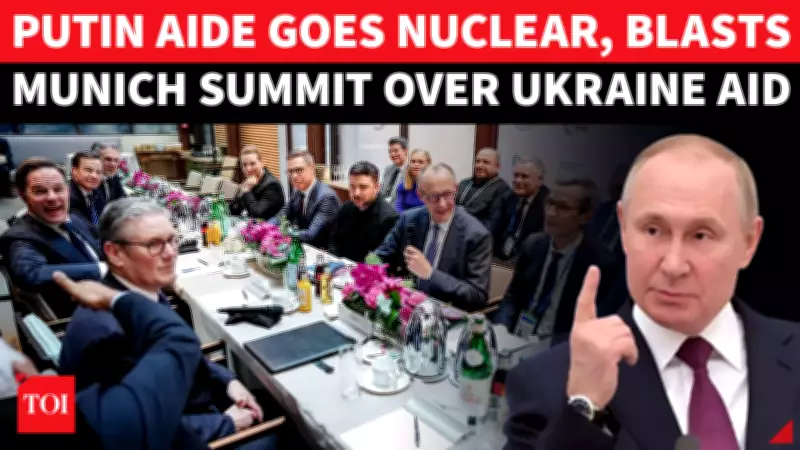
Russia's Diplomatic Offensive at Munich Security Conference
In a sharply worded address at the Munich Security Conference, Russian Foreign Ministry spokeswoman Maria Zakharova launched a comprehensive critique of Western policy toward Ukraine. The remarks, delivered as global officials debated additional military assistance to Kyiv, represent Moscow's latest effort to reframe the international narrative surrounding the ongoing conflict.
Accusations of Ignored Ukrainian Actions
Zakharova specifically accused Western leaders of systematically overlooking what Moscow characterizes as Ukrainian "terror" operations targeting civilian populations. Her comments came during a session where multiple nations were considering enhanced defense packages for Ukraine's armed forces.
The Russian diplomat urged conference participants to redirect their attention toward cross-border strikes and civilian casualties occurring in Russian border regions, rather than focusing primarily on increasing military and financial support for Ukraine. This represents a strategic attempt to shift diplomatic focus toward Moscow's security concerns.

Context of Rising International Tensions
The Munich Security Conference has traditionally served as a key forum for discussing European and global security challenges. This year's gathering occurs against a backdrop of heightened tensions between Russia and Western nations, with Ukraine remaining at the center of geopolitical divisions.
Zakharova's intervention adds fresh diplomatic fuel to these existing tensions, coming just as multiple Western governments were reportedly finalizing new assistance packages for Ukraine. The timing suggests a coordinated Russian effort to influence international opinion at a critical diplomatic juncture.
Broader Implications for International Relations
The Russian statements reflect Moscow's ongoing frustration with what it perceives as Western disregard for its security concerns. By framing Ukrainian military actions as "terror" against civilians, Russia seeks to establish moral equivalence between Ukrainian defensive operations and its own military campaign.
This diplomatic maneuver occurs alongside continued battlefield developments in Ukraine, where both sides have reported civilian casualties in border regions. The Munich conference thus becomes another arena in the broader information war accompanying the physical conflict.
As international debates about Ukraine aid continue, Zakharova's remarks underscore the deepening divide between Russian and Western perspectives on the conflict's fundamental nature and appropriate international responses.