

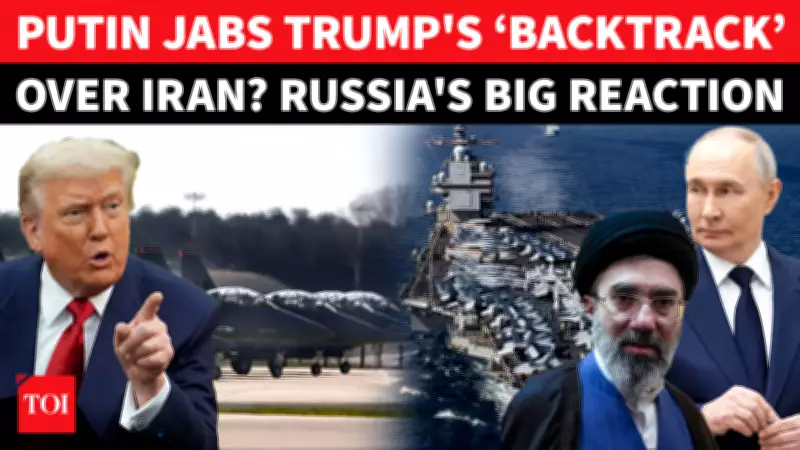
Russia Responds to Trump's Iran Policy Shift with High-Level Tehran Call
In a significant diplomatic development, Russia has actively engaged with Iran following US President Donald Trump's decision to temporarily halt military strikes against Tehran. This move represents a crucial geopolitical realignment as Moscow positions itself as a key mediator in the escalating Middle Eastern tensions.
Lavrov's Diplomatic Intervention
Russian Foreign Minister Sergey Lavrov held a critical telephone conversation with Iranian officials, during which he strongly advocated for a political resolution to the ongoing conflict. Lavrov emphasized Russia's commitment to supporting Iran's legitimate interests while urging restraint from all parties involved.
"The timing of this diplomatic outreach is particularly significant," noted geopolitical analysts, "coming precisely as US-Iran negotiations enter a delicate phase that could fundamentally reshape the regional power dynamics."

Strategic Implications for Middle East Balance
The Russian intervention occurs against a backdrop of several critical developments:
- Trump's decision to pause military action against Iran
- Ongoing US-Iran diplomatic negotiations
- Tehran's efforts to strengthen international alliances
- Increasing regional instability in the Middle East
This diplomatic maneuver raises important questions about whether this represents:
- A genuine step toward de-escalation and conflict resolution
- A strategic realignment of Middle Eastern alliances
- Russia's attempt to increase its influence in the region
- A coordinated response to perceived US policy inconsistencies
Broader Geopolitical Context
The Russia-Iran coordination comes amid multiple regional security challenges, including increased militant activities and ongoing conflicts involving various state and non-state actors. Moscow's proactive diplomatic stance suggests a calculated effort to position Russia as an indispensable player in Middle Eastern affairs, particularly as US foreign policy appears to be undergoing reassessment.
Experts suggest that this development could signal the beginning of a new phase in Middle Eastern geopolitics, where traditional alliances are being tested and new diplomatic configurations are emerging. The outcome of these negotiations could have far-reaching consequences for regional stability, energy security, and global power balances.
As the situation continues to evolve, international observers are closely monitoring whether this Russian diplomatic initiative will lead to substantive progress in resolving the Iran conflict or simply represent another layer of complexity in an already volatile regional landscape.






