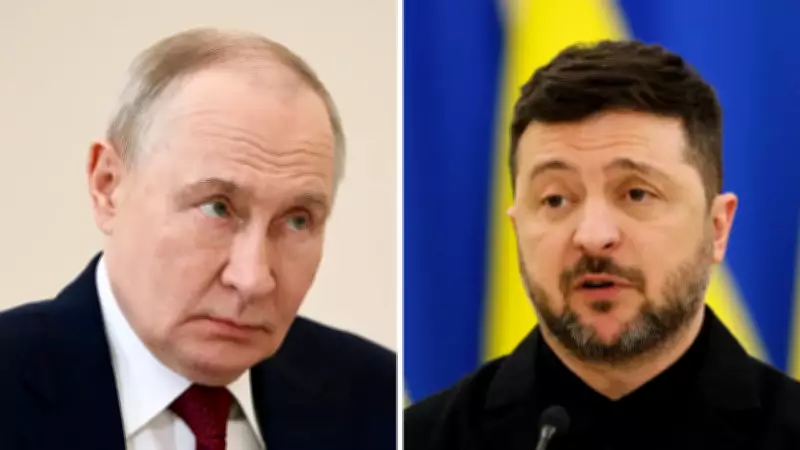
Russia Extends Invitation to Zelenskyy for Moscow Peace Talks Amid Ongoing Conflict
In a significant diplomatic move, Russia has formally invited Ukrainian President Volodymyr Zelenskyy to travel to Moscow for direct peace negotiations. This invitation comes as the protracted war between the two nations is poised to enter its fifth year, marking a critical juncture in the long-standing hostilities. The development was reported by the Reuters news agency, which cited an official statement released by the Kremlin on Thursday.
Kremlin Officials Emphasize Preparation and Safety Guarantees
Kremlin foreign policy aide Yuri Ushakov addressed the potential meeting on Wednesday, stating that any dialogue between Russian President Vladimir Putin and President Zelenskyy would require thorough preparation and must be results-oriented. Ushakov explicitly assured that Zelenskyy's safety would be guaranteed if he accepts the invitation and travels to the Russian capital. This assurance is particularly noteworthy given the ongoing military tensions and security concerns surrounding such high-profile engagements.
However, Kremlin spokesperson Dmitry Peskov indicated that Russia has not yet received a formal response from Ukraine regarding this latest invitation. This lack of immediate reply underscores the complex and delicate nature of the diplomatic overture.

Historical Context and Previous Declined Invitations
This is not the first time Russia has extended such an invitation to the Ukrainian leader. A similar proposal was made last year, which President Zelenskyy declined. At that time, he cited the impossibility of visiting the capital of a nation that was daily launching missile attacks against his country. Instead, Zelenskyy suggested that President Putin should consider traveling to Kyiv for any potential discussions, highlighting the deep-seated mistrust and logistical challenges that have hampered previous peace efforts.
Parallel Peace Initiatives and International Mediation
The Moscow invitation coincides with ongoing US-mediated peace talks that recently took place in Abu Dhabi. According to an unnamed US official who spoke to Axios on Saturday, Zelenskyy and Putin were reportedly "very close" to arranging a meeting following these discussions. The Abu Dhabi talks, held last weekend, have injected fresh momentum into the quest for a sustainable peace agreement, although significant obstacles remain.
A new round of negotiations between Russian and Ukrainian delegations is scheduled for Sunday in Abu Dhabi, continuing the international mediation efforts. US President Donald Trump recently commented on the process, claiming that "very good things" were happening, though he did not provide specific details.
Persistent Disagreements and Core Issues
Despite these diplomatic maneuvers, profound differences continue to separate the Russian and Ukrainian negotiating positions. Several major disagreements persist, including:
- Territorial Control: Russia is demanding that Ukrainian forces withdraw from approximately 20% of the Donetsk region that remains outside Russian military control. Kyiv has firmly rejected this, stating it will not cede territory that Russia has not secured on the battlefield and that could potentially serve as a strategic platform for future Russian advances deeper into Ukraine.
- International Peacekeeping: The potential deployment of international peacekeepers or monitors in post-war Ukraine remains a contentious point of discussion.
- Nuclear Facility Management: The fate of the Russian-controlled Zaporizhzhia nuclear power plant continues to be a critical issue, with both sides holding divergent views on its future governance and security.
Recent Developments and Humanitarian Exchanges
This diplomatic activity follows the latest exchange of war dead between the two nations, a humanitarian gesture that has provided some measure of relief to affected families. Additionally, there have been unconfirmed rumors suggesting that Moscow and Kyiv may have reached an informal agreement to cease strikes on each other's energy infrastructure, though official confirmation of such a truce remains elusive.

The combination of these factors—the Moscow invitation, ongoing Abu Dhabi talks, and recent humanitarian exchanges—creates a complex diplomatic landscape as the conflict approaches its fifth anniversary. The international community continues to watch closely, hoping for a breakthrough that could pave the way for a lasting resolution to one of Europe's most devastating conflicts in recent history.