

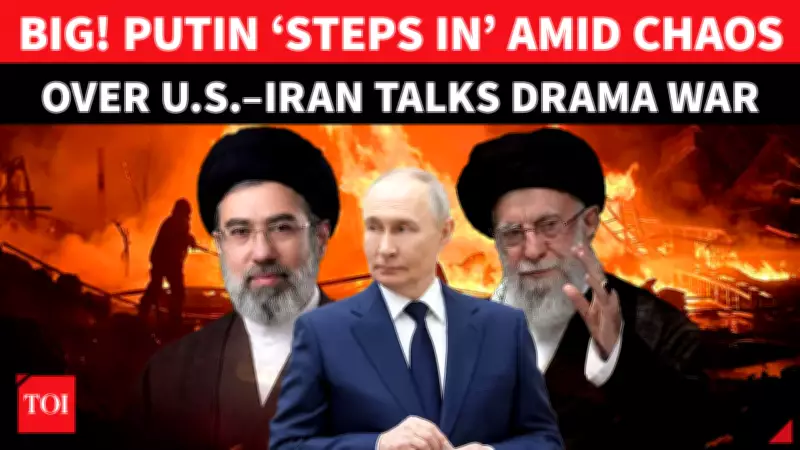
Russia Steps In as Trump Announces Iran Talks, Kremlin Points to Conflicting Signals
In a significant development amid escalating Middle East tensions, Russia has formally intervened in the diplomatic landscape, responding to what Kremlin aides describe as conflicting signals surrounding US-Iran negotiations. This high-level engagement comes directly after US President Donald Trump publicly claimed to have held very good and productive discussions with Tehran, aimed explicitly at ending regional hostilities.
Kremlin Monitors Contradictory Statements, Advocates for Peace
Senior Russian officials have confirmed they are closely monitoring all developments, characterizing the public statements from both Washington and Tehran as contradictory and unclear. A Kremlin spokesperson emphasized that while the situation remains volatile, Moscow maintains a steadfast hope for a peaceful resolution to the ongoing crisis. This diplomatic posture underscores Russia's strategic interest in stabilizing the region, where it holds considerable influence through alliances and economic ties.
Iran's Coordination with Moscow Following Trump's Announcement
Hours after President Trump's announcement regarding the Iran talks, Tehran initiated a crucial high-level telephone call with Moscow, signaling immediate and direct coordination with one of its most vital international allies. This move highlights Iran's reliance on Russian diplomatic and strategic support, particularly as it navigates complex negotiations with the United States. The call is seen as a deliberate effort to align positions and ensure a unified front amid the unpredictable diplomatic environment.

Global Attention Fixed on Key Players' Next Moves
The international community remains intensely focused on the subsequent actions of Washington, Tehran, and Moscow. Analysts suggest that Russia's intervention could serve as a mediating force or potentially complicate the negotiation dynamics, depending on its strategic objectives. The conflicting signals flagged by the Kremlin add a layer of uncertainty to an already tense situation, with global observers awaiting clear indications of progress or further escalation.
This unfolding scenario underscores the intricate balance of power in the Middle East, where diplomatic maneuvers by major global players like Russia and the United States can significantly influence regional stability and international relations.






