Rubio Claims Iran Conflict Nearing Conclusion Without Immediate Ground Invasion
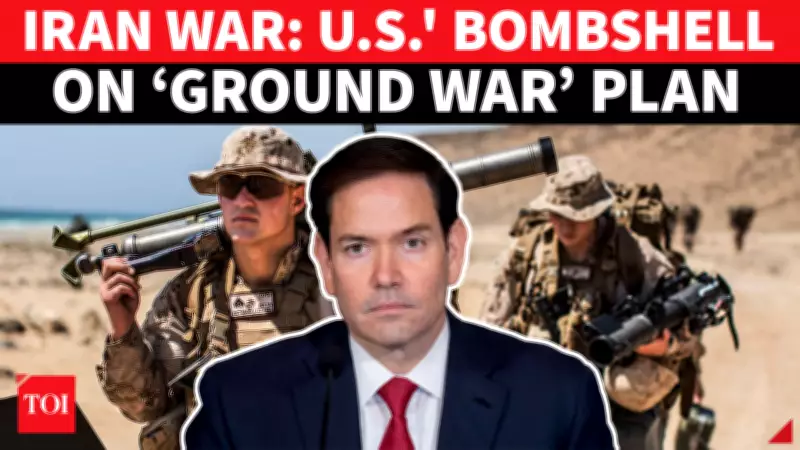
In a significant statement regarding the ongoing tensions in the Middle East, US Secretary of State Marco Rubio has asserted that America can successfully meet its strategic objectives concerning Iran without the necessity of deploying ground troops. This declaration comes amid reports of US forces moving into the region as part of a broader strategy orchestrated by the Trump administration.
Strategic Flexibility and Contingency Planning
Rubio emphasized the concept of "maximum optionality," indicating that the United States is maintaining a flexible approach with extensive contingency plans in place. This strategy allows for adaptive responses to evolving situations without committing to a full-scale ground invasion, which could escalate the conflict further.
The focus remains on achieving diplomatic and military goals through a combination of airpower, naval blockades, and cyber operations, rather than traditional infantry deployments. This approach aims to minimize American casualties while maximizing pressure on Iranian leadership.

Post-Conflict Challenges in the Strait of Hormuz
A key point highlighted by Rubio is the critical importance of the Strait of Hormuz in the aftermath of any conflict resolution. This narrow waterway is a vital chokepoint for global oil shipments, and securing it poses a major challenge for international shipping and security.
Rubio warned that ensuring safe passage through the strait will require coordinated efforts with allies and regional partners to prevent disruptions that could impact the global economy. The potential for Iranian retaliation or asymmetric warfare in this area remains a top concern for US planners.
Context of Broader Regional Dynamics
The statement from Rubio occurs against a backdrop of heightened military activities and diplomatic maneuvers. Recent reports have detailed various incidents, including:
- US Senator Welch criticizing Trump's financial push for the Iran war, labeling it as lacking a coherent strategy.
- Confirmation of hundreds of US soldiers injured in Iranian attacks across the Middle East since hostilities began.
- Expansion of the war zone by Iran's IRGC and threats to US infrastructure following Israeli actions.
- Admissions regarding the intact missile arsenal of Iran's IRGC, with only a fraction reportedly neutralized.
These developments underscore the complex and volatile nature of the situation, with multiple actors involved and high stakes for regional stability.
Implications for US Foreign Policy
Rubio's remarks suggest a shift towards a more restrained military engagement, possibly reflecting lessons learned from past conflicts in the region. By avoiding a ground invasion, the US aims to achieve its objectives while mitigating risks of prolonged entanglement and significant troop losses.
This strategy aligns with broader Trump administration priorities of reducing American military footprints abroad and focusing on economic and diplomatic leverage. However, it also raises questions about the effectiveness of such an approach in compelling Iranian compliance with US demands.
As the situation continues to evolve, the international community watches closely, aware that the outcome in Iran could have far-reaching consequences for global security and energy markets. The emphasis on the Strait of Hormuz highlights the interconnectedness of military strategy and economic interests in this high-stakes geopolitical arena.