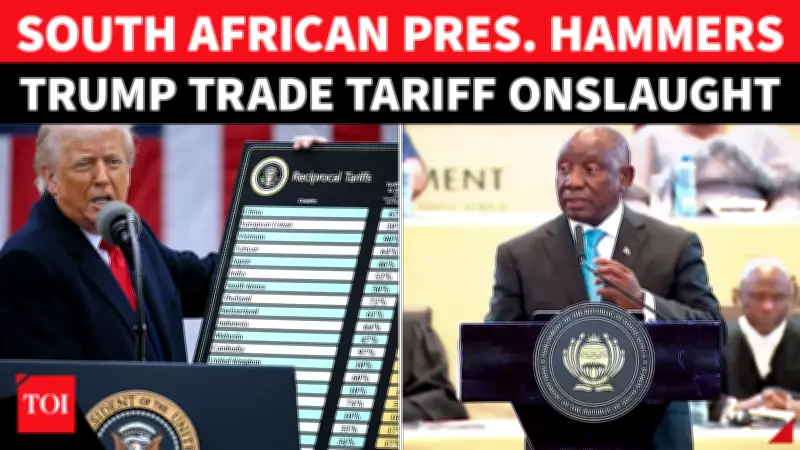
Ramaphosa Denounces Trump's Trade Onslaught, Vows to Resist Economic Coercion
South African President Cyril Ramaphosa delivered a powerful warning against the weaponization of global trade during his State of the Nation Address in Cape Town. In a sharply worded speech, he denounced what he described as a "hegemony unacceptable" in international commerce, directly addressing the economic strain caused by recent US tariff policies.
Trade as a Weapon of Coercion
Ramaphosa painted a concerning picture of a rapidly changing global landscape where narrow self-interest increasingly replaces the common good. He emphasized that powerful nations are imposing themselves on weaker economies through trade mechanisms, creating an environment of economic coercion that threatens global stability.
"We are witnessing a dangerous trend where trade is being wielded not as an instrument of mutual benefit, but as a weapon of coercion," Ramaphosa declared to the assembled parliamentarians and dignitaries. "This hegemony is unacceptable, and we will resist it with every means at our disposal."

Mounting Economic Pressure
The president's remarks come amid escalating trade tensions following former US President Donald Trump's imposition of a 30% tariff on most South African imports last year. This significant economic measure has placed considerable strain on South Africa's export-dependent economy, affecting multiple sectors from agriculture to manufacturing.
Ramaphosa characterized the tariff imposition as a form of "tariff blackmail" that undermines the principles of fair international trade. He warned that such unilateral actions by powerful nations create ripple effects throughout the global economy, disproportionately impacting developing nations.
South Africa's Resilience Strategy
Despite the economic challenges, Ramaphosa expressed confidence in South Africa's ability to withstand external pressures. He identified two key pillars of the nation's resilience:
- The strength of the South African people and their capacity for innovation and adaptation
- The country's vast natural resources that provide a foundation for economic diversification
"Our resilience does not lie in capitulation to external pressure, but in the indomitable spirit of our people and the strategic utilization of our natural wealth," Ramaphosa asserted. "We will not be bullied into submission by economic coercion."
Broader Implications for Global Trade
The South African leader's address highlighted growing concerns about the fragmentation of the global trading system. His speech serves as a stark warning about the potential consequences when major economies abandon multilateral cooperation in favor of unilateral actions.
Ramaphosa called for a return to principles of mutual benefit and equitable trade relationships, emphasizing that sustainable global prosperity depends on cooperation rather than coercion. His address represents one of the most direct challenges to the Trump administration's trade policies from a major developing economy.
As trade tensions continue to shape international relations, Ramaphosa's firm stance signals South Africa's determination to protect its economic sovereignty while advocating for a more balanced global trading system that serves all nations, not just the most powerful.