Russian President Vladimir Putin's diplomatic arrival in India this week has captured global attention, placing a spotlight on New Delhi's delicate geopolitical and economic tightrope walk. This marks Putin's first visit to the country since the onset of the Ukraine conflict, occurring at a moment of intense complexity for Indian foreign policy.
The Core Pillars of India-Russia Engagement
According to analysis from the Global Trade Research Initiative (GTRI), the contemporary India-Russia relationship is fundamentally built upon three critical pillars: energy, defence, and diplomatic coordination. The dynamics of this partnership have undergone a dramatic transformation, especially in the energy sector.
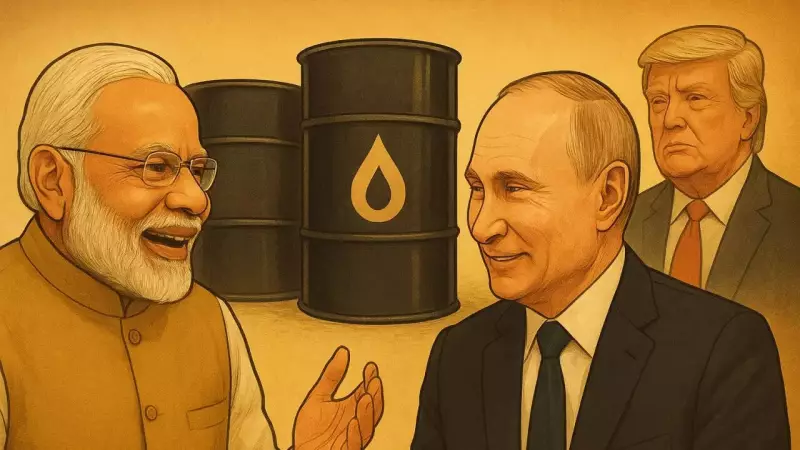
Russia has decisively become India's top crude oil supplier. In 2024, Russian oil constituted a staggering 30-35% of India's total crude imports. The financial scale of this shift is monumental: India's expenditure on Russian crude skyrocketed from a modest $2.3 billion in 2021 to $52.7 billion in 2024. This reliance on discounted oil has reshaped India's energy security but has simultaneously deepened its exposure to international sanctions and geopolitical risks, notes Ajay Srivastava of GTRI.

Navigating the Defence Dependency and Trade Imbalance
The second pillar, defence, remains deeply entrenched. An estimated 60-70% of India's military hardware is of Russian origin, encompassing frontline platforms like fighter jets, submarines, tanks, and air defence systems. This visit is expected to feature discussions on ensuring timely deliveries, such as additional S-400 Triumf systems, and securing long-term maintenance and upgrade agreements for this vast inventory.
However, the booming energy trade has created a stark economic imbalance. India's imports from Russia, dominated by oil, coal, and fertilisers, reached nearly $64 billion in recent years. In stark contrast, Indian exports to Russia plateau at around $5 billion annually. These exports are narrowly focused on pharmaceuticals and machinery, with minimal penetration in Russian consumer markets for garments, electronics, or other value-added goods.
The Shadow of US Pressure and Payment Workarounds
This deepening engagement with Moscow unfolds under continuous pressure from Washington. The United States has persistently urged India to reduce its Russian oil purchases while simultaneously seeking greater market access for American products and defence equipment.
Financial sanctions have forced the creation of alternative payment mechanisms. With Russia's partial exclusion from the SWIFT network, transactions now flow through a mix of currencies: UAE dirhams (60-65%), Indian rupees (25-30%), and Chinese yuan (5-10%). This system, while functional, is fragile. A significant challenge is the accumulation of roughly ₹60,000 crore in Indian rupees in special accounts that Russia finds difficult to utilise, prompting a Russian preference for dirham settlements.
Potential Outcomes: Cautious Steps or Strategic Leap?
GTRI outlines two plausible scenarios emerging from this high-level summit. The more likely outcome is a cautious strengthening of existing ties. This would involve India securing firm commitments on defence supplies and maintenance, while Russia locks in long-term oil and gas contracts. The two nations might also formalise a more robust payment framework, possibly integrating Russia's SPFS system with India's RuPay network.
A more ambitious, though riskier, outcome could signal a deeper strategic realignment. This could include agreements on joint defence production, significant Indian investment in Russian Arctic or Far East energy projects, and accelerated progress on connectivity corridors like the International North-South Transport Corridor. Such a move would significantly advance India's Eurasian integration but could provoke a sharper reaction from Western capitals.

"Beyond optics, the summit is about securing fuel, weapons and payments against a world of financial and political fragmentation. For India, the challenge is strategic balance—protecting autonomy while navigating pressure from Washington and dependence on Moscow," GTRI concludes. The world now watches to see which path New Delhi chooses.