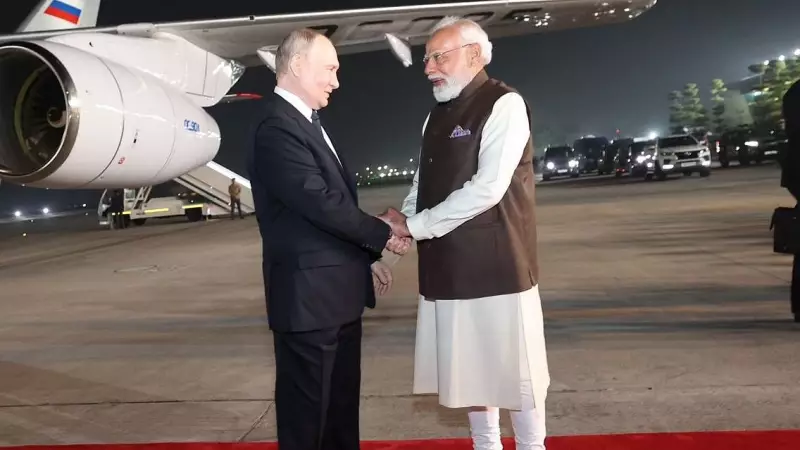
Russian President Vladimir Putin has strongly defended India's ongoing purchases of Russian fuel, framing it as a matter of sovereign right and equality on the global stage. His pointed comments came just hours before he was scheduled to land in New Delhi for crucial summit talks with Prime Minister Narendra Modi on 04 December 2025.
Putin's Challenge to Western Hypocrisy
In an interview with a broadcaster, Putin posed a direct and rhetorical question that challenges the prevailing Western narrative on energy sanctions. He asked why India should be denied the same privilege that the United States and other nations have historically exercised in securing energy resources according to their national interests. The interview was set to be aired shortly after his arrival in the Indian capital, setting the tone for the high-level discussions.
The Russian leader's statement is seen as a robust justification of the robust India-Russia energy partnership that has expanded significantly since 2022. It underscores a key argument made by New Delhi: that its primary obligation is to ensure energy security and stable prices for its vast population, a non-negotiable aspect of its developmental journey.
The Context of the Delhi Summit
The timing of Putin's remarks is highly significant. They were delivered en route to a bilateral summit with PM Modi, an event closely watched by global observers. The summit talks, held on 04 December 2025, were expected to cover a wide range of issues, from defense and trade to the evolving geopolitical landscape.
However, by foregrounding the energy issue, Putin highlighted the most tangible and successful pillar of bilateral cooperation in recent years. India has emerged as one of the largest buyers of Russian crude oil, a move that has provided economic relief to Russian exports while helping India contain inflation and manage its import bill.
Implications for Global Diplomacy
Putin's public framing of the issue places India's pragmatic policy choices within a discourse of fairness and sovereign equality. It effectively counters criticism from some Western quarters by pointing out perceived double standards. The message is clear: India is acting in a manner consistent with the practices of other major powers, including the US.
This stance reinforces India's position as an independent actor in foreign policy, capable of making decisions based on its national interest despite external pressure. The summit between the two leaders was therefore not just a routine diplomatic engagement but a reaffirmation of a time-tested strategic partnership that continues to adapt to new global realities.
The outcome of the Modi-Putin talks is likely to have lasting consequences for international trade patterns, energy flows, and the broader balance of power, proving that the India-Russia relationship remains a key factor in world affairs.