

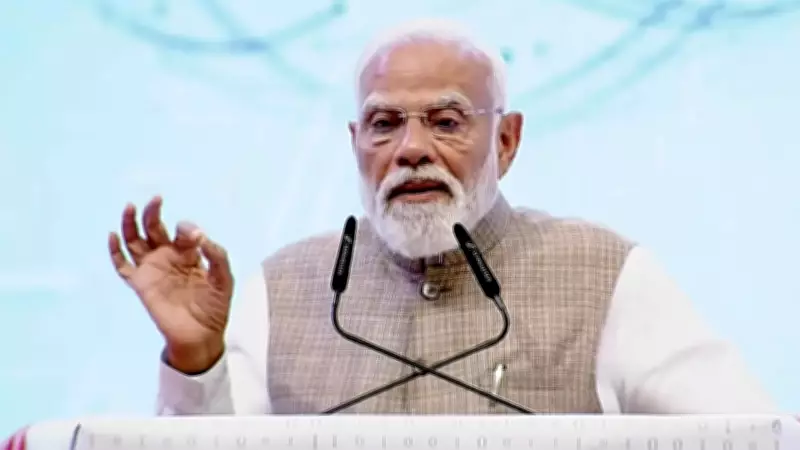
Prime Minister Modi Engages with Kuwait Leadership Amid Regional Tensions
Prime Minister Narendra Modi held a significant telephonic exchange on Wednesday with Crown Prince of Kuwait, Sheikh Sabah Al-Khaled Al-Hamad Al-Mubarak Al-Sabah, conveying warm greetings on the upcoming festival of Eid. The conversation, which took place against the backdrop of escalating conflict in West Asia, also addressed critical regional security concerns.
Condemnation of Attacks and Sovereignty Concerns
During their discussion, Prime Minister Modi strongly condemned the recent attacks on Kuwait's sovereignty and territorial integrity. This condemnation comes amid the ongoing conflict involving joint forces of the United States and Israel against Iran, which has seen heightened military actions across the region.
In a detailed social media post on platform X, PM Modi stated: "Spoke with HH Sheikh Sabah Al-Khaled Al-Hamad Al-Mubarak Al-Sabah, Crown Prince of Kuwait, and conveyed greetings on the upcoming festival of Eid. We exchanged views on the evolving situation in West Asia and shared concerns over recent developments."

The Prime Minister emphasized India's firm position, adding: "Reiterated India’s condemnation of attacks on Kuwait’s sovereignty and territorial integrity. Ensuring safe and free navigation through the Strait of Hormuz remains our foremost priority."
Strategic Focus on Strait of Hormuz Security
The leaders agreed that sustained diplomatic engagement is essential for achieving regional peace and stability. PM Modi specifically highlighted the critical importance of maintaining safe and unrestricted navigation through the strategically vital Strait of Hormuz, a key global oil transit route that has become increasingly vulnerable amid the conflict.
PM Modi expressed gratitude for Kuwait's continued support in ensuring the safety and wellbeing of the substantial Indian community residing in Kuwait, stating: "I thanked him for continued support for the safety and wellbeing of the Indian community in Kuwait."
Broader Diplomatic Outreach in the Gulf Region
This conversation follows PM Modi's earlier engagement on Monday with UAE President Mohamed bin Zayed Al Nahyan, where similar concerns were discussed. During that exchange, the Prime Minister reiterated India's strong condemnation of all attacks on Gulf countries that have resulted in loss of innocent lives and damage to civilian infrastructure.
The talks occurred amidst reports of fresh attacks on the UAE's energy infrastructure by Iranian drones, highlighting the volatile security situation in the region. PM Modi noted in his X post about the UAE conversation: "We agreed on the importance of ensuring safe and free navigation through the Strait of Hormuz. We will continue to work together for the early restoration of peace, security, and stability in the region."
India's Strategic Energy and Security Considerations
India maintains crucial energy partnerships with both Kuwait and the UAE, making regional stability a matter of significant national interest. The UAE serves as India's fourth largest source of crude oil and second largest source of liquefied natural gas (LNG) and liquefied petroleum gas (LPG).
Beyond the safety of the Indian diaspora, India's immediate concern revolves around potential disruptions to LPG supplies through the Strait of Hormuz, which Iran has effectively blockaded amid the conflict. The Indian government has explicitly chosen dialogue and diplomacy with Tehran to address these concerns, rather than considering participation in any US-led military coalition to secure the vital waterway.
This diplomatic approach aligns with broader international sentiment, as proposals for sending warships to the region have found limited support even among NATO allies of the United States. India's position emphasizes peaceful resolution through diplomatic channels while safeguarding its strategic energy interests and the welfare of its citizens abroad.






