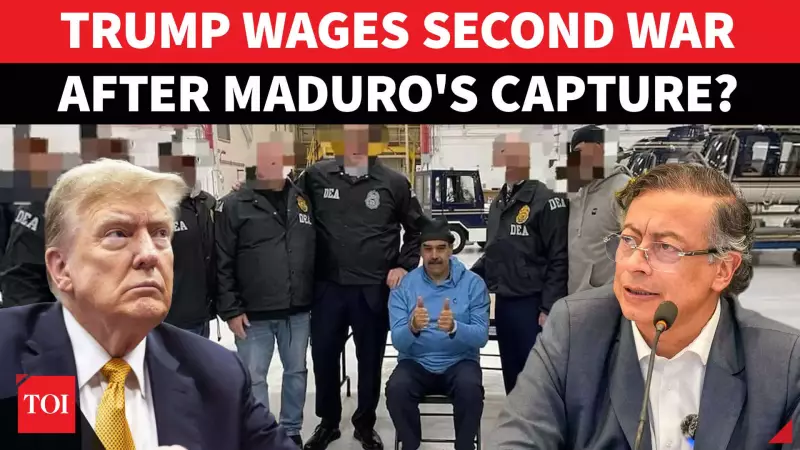
In a dramatic escalation of regional tensions, Colombian President Gustavo Petro has taken a series of aggressive military and administrative actions following a recent US military operation in neighbouring Venezuela. The moves, announced on January 5, 2026, include the dismissal of intelligence officers and the deployment of a significant military force to the shared border.
Petro's Forceful Rejection of US Criticism
President Petro forcefully rejected what he termed as "U.S.-linked criticism" in the wake of Washington's military actions in Venezuela. Reaffirming his constitutional authority as the nation's commander-in-chief, he dismissed claims that questioned Colombia's cooperation on crucial security and narcotics policy matters.
In a stern warning, Petro accused both political and criminal interests of spreading deliberate misinformation. He stated this campaign aimed to destabilise Colombia's internal security and strain its diplomatic relationship with the United States.

Military Moves and Policy Defence
The Colombian leader's response was not merely rhetorical. In a significant show of force, he ordered the deployment of 5,000 troops to the nation's border region. Concurrently, he fired several intelligence officers, signalling a major shake-up within the country's security apparatus amidst the crisis.
Defending his government's controversial anti-drug strategy, President cited record-breaking cocaine seizures as evidence of its effectiveness. He also issued a caution against military-led approaches to the drug war, warning that such actions could lead to significant harm for innocent civilians caught in the crossfire.
Regional Fallout and Strategic Stance
This development marks a critical moment in the complex triangular relationship between Colombia, the United States, and the Venezuelan government of Nicolás Maduro. Petro's actions and statements position Colombia on a defiant path, challenging external pressure while asserting national sovereignty over its security policies.
The deployment of thousands of troops highlights the real-world consequences of the diplomatic spat, potentially altering the security dynamics along one of South America's most volatile borders. The situation continues to evolve, with regional stability hanging in the balance.