

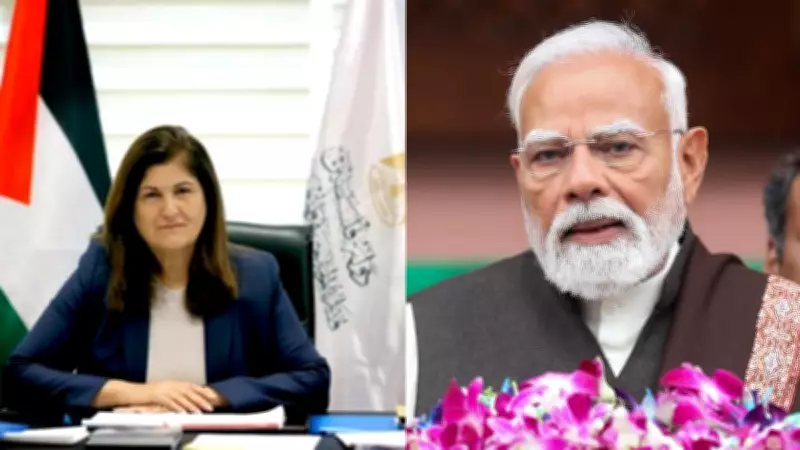
Palestine Calls on India to Facilitate Peace in West Asia as PM Modi Prepares for Israel Visit
In a significant diplomatic development, Palestinian authorities have publicly expressed their desire for India to play a mediating role in the ongoing conflicts in West Asia. This appeal comes just ahead of Prime Minister Narendra Modi's scheduled visit to Israel, highlighting the strategic importance of India's foreign policy in the region.
Historical Ties and Diplomatic Leverage
India has maintained longstanding and balanced relationships with both Israel and Palestine, a position that Palestinian officials believe can be leveraged to foster dialogue. India's historical support for the Palestinian cause, combined with its growing strategic partnership with Israel, places it in a unique position to act as a credible intermediary.
Palestinian representatives have emphasized that New Delhi's impartial stance and its rising global influence make it an ideal candidate to bring conflicting parties to the negotiation table. They argue that India's diplomatic efforts could help de-escalate tensions and promote a peaceful resolution in West Asia.

Timing Ahead of Prime Minister Modi's Israel Trip
The timing of this request is particularly noteworthy, as it coincides with Prime Minister Narendra Modi's planned visit to Israel. This visit is expected to strengthen bilateral ties between India and Israel, covering areas such as defense, technology, and economic cooperation.
Palestinian officials hope that during this visit, India can use its influence to encourage constructive dialogue between Israel and Palestine. They believe that Modi's engagement could serve as a catalyst for renewed peace efforts, addressing key issues like settlements, security, and sovereignty.
Challenges and Opportunities for Indian Diplomacy
While the appeal presents an opportunity for India to enhance its diplomatic profile, it also comes with significant challenges. Mediating in the complex and deeply entrenched conflicts of West Asia requires careful navigation of sensitive geopolitical dynamics.
- Balancing Act: India must maintain its equilibrium in relations with both nations, avoiding perceptions of bias.
- Regional Stability: Successful mediation could contribute to broader stability in West Asia, benefiting global security.
- Global Leadership: Taking on this role could position India as a key player in international peacekeeping efforts.
Experts suggest that India's approach should focus on confidence-building measures and facilitating back-channel communications, rather than imposing solutions.
Implications for India's Foreign Policy
This development underscores the evolving nature of India's foreign policy, which increasingly emphasizes proactive diplomacy in conflict zones. By considering a mediation role in West Asia, India demonstrates its willingness to engage in global issues beyond its immediate neighborhood.
The outcome of this diplomatic endeavor could have far-reaching implications for India's international standing and its relationships in the Middle East. It reflects a strategic shift towards leveraging soft power and diplomatic channels to address international disputes.
As Prime Minister Modi's visit to Israel approaches, all eyes will be on how India responds to Palestine's call for mediation. The situation highlights the delicate balance India must strike in its foreign relations, while also showcasing its potential as a peacemaker in one of the world's most volatile regions.






