Pakistan Defence Minister's Pizza Hut Blunder Creates Social Media Storm
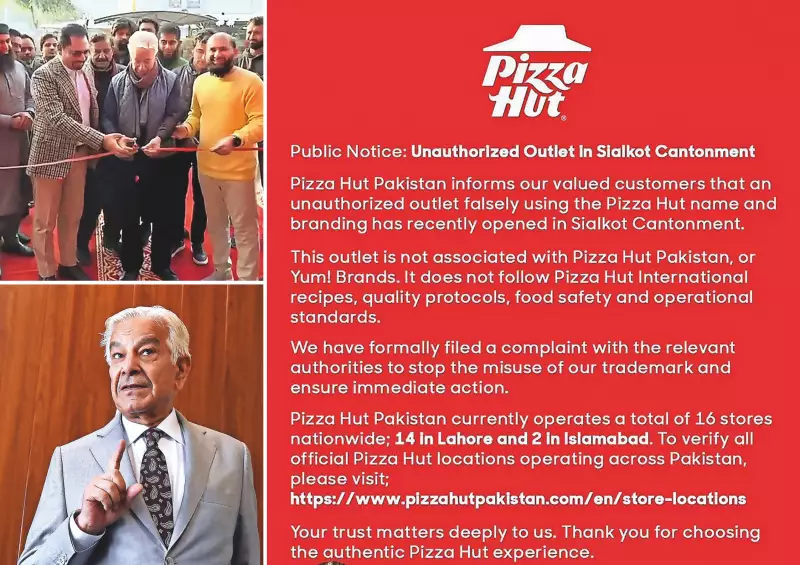
In what appears to be another embarrassing public misstep, Pakistan's Defence Minister Khawaja Asif has found himself at the center of a culinary controversy. The senior politician recently presided over what he believed was the grand inauguration of a new Pizza Hut outlet in Sialkot, only to discover the establishment was completely unauthorized by the international fast-food chain.
The Ill-Fated Inauguration Ceremony
The event unfolded with all the trappings of an official opening ceremony. A red carpet was meticulously laid out, floral arrangements decorated the venue, and multiple cameras captured the proceedings as Asif arrived to cut the ribbon. The location was fully decked out with Pizza Hut branding, creating the convincing appearance of a legitimate franchise opening.
However, the celebration quickly turned sour when Pizza Hut's corporate office publicly disavowed the outlet. The American fast-food giant issued a statement clarifying that the Sialkot establishment was "unauthorised" and did not meet their international standards for recipes, quality protocols, food safety, or operational procedures.

Social Media Erupts with Mockery
The revelation sparked immediate backlash across social media platforms, with netizens quickly turning the incident into viral content. Many questioned how a defence minister could find time for such trivial matters amid pressing national security concerns.
One X user sarcastically commented, "How does the defense minister have so much time for pizza inaugurations?" while another asked, "Which fake outlet is he inaugurating next?" The incident became fodder for countless memes and jokes, with many highlighting the importance of verifying brand authenticity before participating in promotional events.
Pizza Hut's Official Response
The pizza chain clarified that it operates only 16 official stores across Pakistan and has filed a formal complaint to prevent trademark misuse. This unauthorized outlet not only violated intellectual property rights but also potentially compromised food safety standards that the brand rigorously maintains worldwide.
Not His First Public Embarrassment
This pizza-related blunder is not Asif's first encounter with public embarrassment. During a previous interview with CNN, when pressed for evidence that Pakistani forces had shot down Indian jets during Operation Sindoor, the defence minister pointed to "Indian social media" as his primary source.
He insisted that "It is all over the Indian media," presenting unverified social media posts as factual evidence. The anchor promptly rebuked him for relying on such unreliable sources. India's Press Information Bureau later fact-checked the claims, demonstrating that the viral images were unrelated to the incident and had been recycled by pro-Pakistan accounts.
That media moment transformed into endless trolling material, giving India significant diplomatic advantage in the information warfare arena. The pattern of relying on unverified sources has become a recurring theme in Asif's public engagements.
Broader Implications and Lessons
This incident highlights several important considerations for public figures:
- Due diligence is essential before associating with commercial establishments
- Brand verification should precede participation in inauguration ceremonies
- Social media scrutiny has become increasingly unforgiving of political missteps
- International trademark laws carry significant weight even in local contexts
The pizza blunder serves as a cautionary tale for politicians worldwide about the importance of thorough verification before lending their credibility to commercial ventures. In an era where every public appearance is documented and scrutinized, such missteps can quickly escalate from local embarrassments to international talking points.