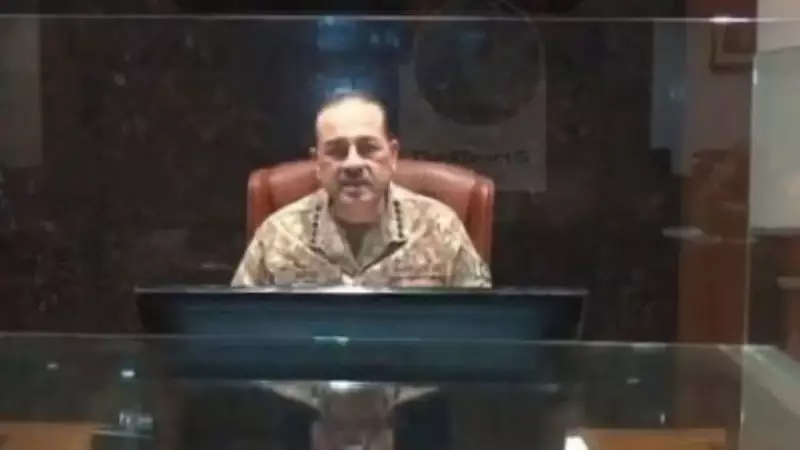
A video circulating widely on social media has ignited a fresh wave of discussion regarding the tense relations between India and Pakistan. The footage shows Pakistan's Army Chief, General Asim Munir, appearing in what is described as a highly unusual and heavily fortified security setup during a public appearance.
Details of the Viral Video and Security Posture
The video, which surfaced online recently, captures General Asim Munir seated behind a thick, transparent protective screen, believed to be bulletproof glass. Observers and security analysts have noted that he is also wearing a bulletproof vest underneath his uniform, a level of personal protection rarely seen for a serving army chief during a staged public event. The event in question was reportedly a meeting with local elders, but the extreme security measures have become the focal point.
This visual has been interpreted by many strategic experts, particularly in India, as a sign of deep-seated apprehension within the Pakistani military establishment. The specific timing and nature of the security have led to speculation that it reflects a heightened state of alert and fear directed towards India. The footage has been widely shared and commented upon, with many drawing connections to the ongoing geopolitical friction between the two nuclear-armed neighbors.

Context of India-Pakistan Relations and Analysis
The emergence of this video did not occur in a vacuum. It comes against a backdrop of persistently strained ties between New Delhi and Islamabad. Key points of contention include:
- Cross-border terrorism: India's longstanding accusations against Pakistan regarding the harboring of terror groups.
- Kashmir dispute: The abrogation of Article 370 in 2019 and the subsequent hardening of positions on both sides.
- Diplomatic stalemate: Severely downgraded diplomatic relations and a lack of meaningful dialogue.
Security analysts suggest that General Munir's visible protective gear is a psychological signal, albeit an unintended one. It is seen as projecting an image of a leadership under threat, which contrasts with the typical portrayal of military strength. Some experts argue that this could be for domestic consumption, to bolster the army's image as a vigilant institution, while others see it as a genuine reflection of threat perceptions. The Indian security establishment has reportedly taken note of the development, viewing it through the prism of Pakistan's internal security challenges and its posture towards India.
Reactions and Potential Implications
The video has triggered a range of reactions. In Indian media and strategic circles, it has been framed as evidence of Pakistan's "nervousness" and defensive mindset. The narrative suggests that the Pakistani army, which holds considerable power in the country's polity, is feeling particularly vulnerable. On social media platforms, the response has been a mix of analysis and ridicule, with many users questioning the need for such extreme measures for the head of the army during a controlled event.
While the immediate practical implications may be limited, the incident contributes to the existing atmosphere of mistrust. It reinforces the perception of a deep security dilemma between the two nations. Such symbolism can impact public opinion and harden attitudes on both sides of the border, making future diplomatic outreach even more challenging. The event underscores how visual symbolism in the digital age can quickly become a focal point for geopolitical analysis and public discourse.
In conclusion, the video of General Asim Munir in bulletproof gear serves as a potent symbol of the current state of India-Pakistan relations. It highlights the pervasive climate of suspicion and the high-alert security paradigms that define interactions between the two countries. The incident is likely to be remembered as a curious but telling footnote in the long and complicated history of the bilateral relationship, emphasizing that every public action by leadership is scrutinized for hidden meanings and strategic signals.