

Opposition Parties Unite Behind Government on Middle East Crisis Following High-Level Briefing
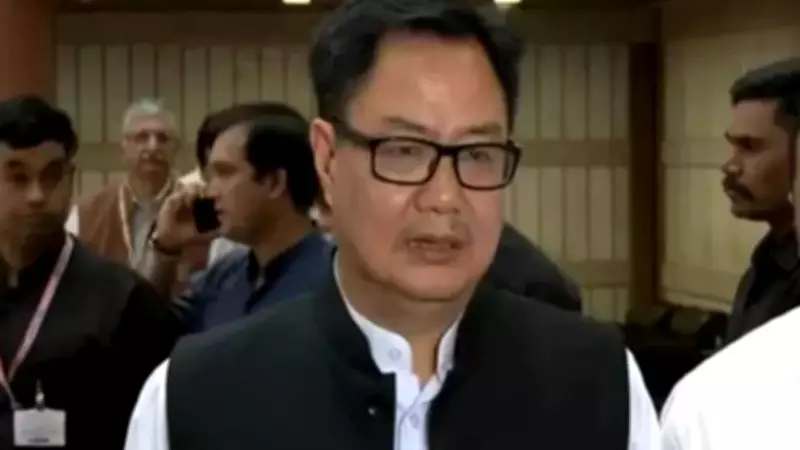
Union Parliamentary Affairs Minister Kiren Rijiju declared on Wednesday that opposition parties have pledged their complete support to the government after a crucial all-party meeting convened to address the escalating Middle East crisis. The meeting, held in New Delhi, focused on the fallout from the Iran-Israel-US conflict and its profound implications for India's national interests.
Government Provides Comprehensive Briefing on Regional Conflict
Speaking to reporters after the meeting, Minister Rijiju emphasized that the government organized the discussion specifically to update political leaders on the rapidly evolving situation in the Middle East and outline the protective measures being implemented to safeguard Indian interests. "All the opposition parties have assured us that they will stand with the government in all the steps the government takes according to the situation," Rijiju stated, quoting from an ANI report.
The minister confirmed that representatives from across the political spectrum actively participated in the deliberations, where leaders expressed significant concerns regarding how the tripartite conflict involving Iran, Israel, and the United States could impact India. Specific worries centered on the safety of Indian citizens abroad, potential disruptions to energy supplies, and broader national security considerations.

Rijiju assured that government officials responded "comprehensively and thoroughly" to all queries raised during the session. He expressed personal satisfaction that every question posed by opposition representatives had been adequately addressed, fostering a spirit of political unity during a time of international uncertainty.
Energy Security and Supply Chain Concerns Addressed
During the meeting, several opposition members specifically sought detailed information about gas and petroleum supplies transiting through the strategically vital Strait of Hormuz, a critical maritime chokepoint currently affected by regional hostilities. Minister Rijiju revealed that opposition leaders were informed about successful government efforts to secure energy shipments, noting that "India secured four ships already" and that participants appeared satisfied with these protective measures.
"From the government's side, all the queries and all the confusion, whatever was there, all were clearly explained by the government," Rijiju affirmed. He added that opposition parties actually thanked the government for convening the meeting and emphasized the necessity for all political factions to present a united front during challenging global circumstances.
The minister connected the meeting's positive outcome directly to Prime Minister Narendra Modi's recent parliamentary appeal for political solidarity in response to the crisis. Rijiju praised the opposition for demonstrating "maturity" by explicitly stating their intention to support government actions taken in the national interest.
Political Participation and Dissenting Voices
While most major political parties participated in the briefing, Minister Rijiju noted one significant absence: the Trinamool Congress (TMC). According to his account, TMC leaders declined to attend despite receiving two separate invitations, citing prior travel commitments as their reason for non-participation. "Only the Trinamool Congress (TMC) was one party that didn't participate," Rijiju clarified.
However, not all opposition representatives emerged from the meeting entirely satisfied with the government's responses. AAP MP Sanjay Singh reported that his party raised specific concerns about public panic regarding LPG availability and reports of long queues for gas cylinders. He stated that government officials responded by highlighting India's domestic production capacity, noting that the country produces approximately 60 percent of its LPG requirements internally while maintaining substantial oil reserves, thereby assuring no imminent gas shortages.

Meanwhile, senior Congress leader Tariq Anwar characterized the meeting as "unsatisfactory" and reiterated the Opposition's persistent demand for a full parliamentary debate under specific procedural rules. Anwar argued that merely stating India's desire to avoid war was insufficient when conflict was already actively unfolding in the region.
High-Level Government Representation and Broader Context
The all-party meeting featured significant ministerial participation, being chaired by Defence Minister Rajnath Singh and attended by Home Minister Amit Shah, Finance Minister Nirmala Sitharaman, External Affairs Minister S. Jaishankar, Petroleum Minister Hardeep Puri, and Foreign Secretary Vikram Misri, among other senior officials.
This high-level gathering followed Prime Minister Modi's statements earlier in the week before both houses of Parliament, where he identified protecting Indians domestically and internationally as the government's utmost priority amid the ongoing conflict. The Prime Minister revealed that more than 375,000 Indians have been repatriated since hostilities began, including over 1,000 individuals from Iran specifically.
PM Modi additionally warned that the fighting has triggered a serious global energy crisis while raising concerns about ships stranded in the Strait of Hormuz carrying Indian crew members, underscoring the multifaceted challenges India faces in the current geopolitical landscape.





