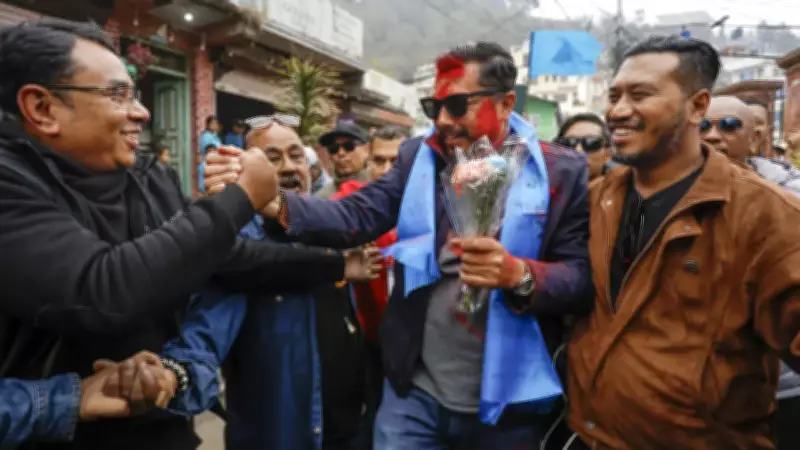
Nepal's 2026 Parliamentary Election Results Signal Major Political Transformation
Six months after Nepal's landmark Gen-Z uprising, the country's political landscape is undergoing a dramatic transformation as early results from the 2026 parliamentary elections are announced. According to figures cited by The Kathmandu Times, the Rastriya Swatantra Party (RSP) is making unprecedented gains across Nepal, securing three crucial parliamentary seats in the capital city of Kathmandu and establishing commanding leads in more than 110 constituencies nationwide.
RSP's Dominant Performance in Kathmandu
The RSP's breakthrough performance is most evident in the Bagmati province, where the party has captured three key constituencies in Kathmandu:
- Ranju Neupane triumphed in Kathmandu-1 with 15,455 votes, defeating her nearest rival by a substantial margin of 9,091 votes.
- Shishir Khanal secured a decisive victory in Kathmandu-6, receiving 27,916 votes and registering an impressive victory margin of 21,249 votes.
- Biraj Bhakta Shrestha won the Kathmandu-8 seat with 24,592 votes, achieving a commanding lead of 21,375 votes over his opponent.
These victories represent a significant shift in Nepal's political dynamics, particularly in the capital region where established parties have traditionally held sway.

National Political Landscape Takes Shape
Beyond Kathmandu, the election results reveal a fragmented but evolving political scenario across Nepal's provinces:
In Lumbini province, the Nepali Communist Party has secured one seat while leading in more than eight constituencies. Former prime minister Pushpa Kamal Dahal emerged victorious in Rukum East-1, securing 10,240 votes and defeating his opponent by 6,778 votes.
The Gandaki province has seen the Nepali Congress secure two seats while also leading in more than eight constituencies. Tek Bahadur Gurung won from Manang-1 with 2,415 votes, registering a victory margin of 1,961 votes, while Yogesh Gauchan Thakali secured the Mustang-1 seat with 3,307 votes, defeating his rival by 1,501 votes.
RSP Leader's Personal Triumph
Adding to the RSP's remarkable performance, party leader Blendra Shah is personally leading from the constituency of Jhapa-5 against former Prime Minister KP Sharma Oli by over 10,000 votes. This individual contest symbolizes the broader challenge to Nepal's established political order that these elections represent.
Ongoing Vote Counting and Future Implications
Vote counting continues across multiple constituencies as Nepal awaits final results that will determine the composition of the new parliament. The early trends suggest a significant realignment in Nepali politics, with the RSP emerging as a formidable new force that could reshape governance and policy directions in the coming years.
These elections, occurring just six months after widespread youth-led protests, appear to reflect a growing demand for political change and new leadership approaches among Nepal's electorate. The substantial leads established by the RSP in over 110 constituencies nationwide indicate that this political transformation extends far beyond the capital region.