Nepal Election 2026: Balen Shah's RSP Achieves Landslide Victory
In a historic political shift, rapper-turned-politician Balendra Shah's newly formed Rastriya Swatantra Party (RSP) is heading toward a sweeping victory in Nepal's first general election since last year's violent Gen Z-led protests. This outcome significantly disrupts the long-standing dominance of traditional political parties that have governed the Himalayan nation for decades.
Election Results and Seat Distribution
According to the latest data from the Election Commission of Nepal, the RSP has secured 18 seats and is leading in 99 other constituencies, positioning the party for a commanding majority in the 275-member House of Representatives. In contrast, established parties are trailing far behind:
- Nepali Congress: Won 4 seats, leading in 11 constituencies
- Communist Party of Nepal (Unified Marxist–Leninist): Won 1 seat, leading in 11 constituencies
- Nepal Communist Party: Secured 2 seats, ahead in 10 constituencies
- Shram Sanskriti Party: Leading in 3 constituencies
The election follows the ouster of former prime minister KP Sharma Oli after youth-led protests demanding anti-corruption measures, better governance, and generational change in politics. Shah, who gained prominence as Kathmandu's mayor in 2022, is contesting the Jhapa-5 constituency directly against Oli, symbolizing the clash between Nepal's political old guard and new generation leadership.

Background: The Protests That Reshaped Nepal's Politics
The 2026 election represents a crucial test for Nepal's political establishment following months of unrest that began in September 2025. What started as demonstrations against a government-imposed social media ban quickly expanded into a nationwide movement highlighting concerns over corruption, nepotism, and economic stagnation.
The protests escalated into violent clashes with security forces, resulting in at least 77 fatalities and damage to several key government buildings including parliament, the Supreme Court, and the central secretariat. Since the unrest, Nepal has been governed by an interim administration led by former chief justice Sushila Karki, which called early elections to restore a full democratic mandate.
Election Logistics and Security Measures
Authorities implemented extensive security measures for this high-stakes election, deploying more than 340,000 personnel across the country including nearly 150,000 temporary "election police." Additional precautions included banning vehicles on polling day and suspending campaign activities to maintain order.
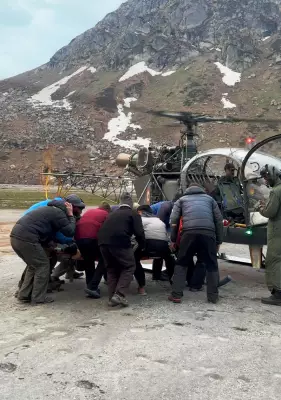
The election presented significant logistical challenges due to Nepal's mountainous terrain, where ballot boxes from remote regions often require manual transport or helicopter delivery, potentially slowing the counting process. Approximately 18.9 million voters were eligible to participate, with turnout estimated at around 60 percent.
Political Significance and International Attention
This election is being closely monitored by neighboring India and other international observers who hope for political stability in Nepal to advance bilateral development cooperation. The results indicate a clear mandate for change among Nepali voters, particularly the youth demographic that has grown increasingly frustrated with traditional political structures.
Shah's campaign, characterized by his trademark dark blazer and sunglasses that have become popularly known as "Balen Shah glasses," has come to symbolize the push for generational change in Nepali politics. Once known for rap songs criticizing corruption and political stagnation, Shah first gained prominence online before winning Kathmandu's mayoral election as an independent candidate.
The RSP's strong performance suggests that the momentum from Nepal's protest generation has successfully translated into electoral success, potentially ushering in a new era of governance focused on anti-corruption measures, improved transparency, and greater youth representation in political leadership.