The Indian Navy has taken a major leap forward in strengthening its maritime prowess with the commissioning of a new squadron of advanced multi-role helicopters. The event marks a strategic enhancement of India's defensive capabilities along its crucial western coastline.
A Strategic Induction at INS Hansa
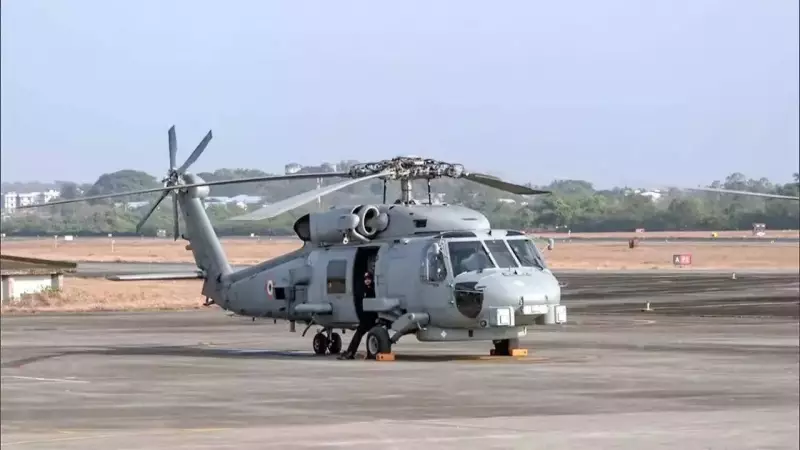
On Wednesday, the Indian Navy formally commissioned its second squadron of MH-60R (Romeo) helicopters, named INAS 335 ‘Ospreys’. The ceremony was held at the INS Hansa naval air base in Goa and was presided over by Chief of Naval Staff Admiral Dinesh Tripathi. The induction was celebrated with a traditional water cannon salute and a march past by the newly acquired aircraft, often hailed as the Navy's "flying destroyers".
Admiral Tripathi underscored the critical timing and importance of this deployment. He stated that the establishment of this first operational MH-60R squadron on the Western Seaboard represents a pivotal milestone for naval aviation. This move is directly aimed at countering the increasingly complex and contested maritime environment surrounding India.

Addressing Modern Maritime Threats
In his address, the Navy Chief elaborated on the evolving security challenges. "The maritime environment around us, today, is more complex and contested than ever before," Admiral Tripathi said. He pointed to shifting geopolitics, rapid technological advancement, and a broadening spectrum of threats—from grey-zone activities to disruptions in sea supply chains—as factors shaping this new reality.
He directly linked the Navy's modernization efforts, including this induction, to India's broader national objectives. "It is within this challenging and dynamic strategic context that India is undertaking its maritime voyage towards becoming Viksit Bharat by 2047," he added. Strengthening maritime security and deterrence is fundamental to protecting sea lines of communication and growing national interests, he emphasized.
Historical Significance and Future Roadmap
The commissioning date was rich with historical resonance. Admiral Tripathi noted that 2025 marks 75 years since the Indian government approved the formation of a Fleet Air Arm, which gave wings to Naval Aviation. Furthermore, he connected the event to Operation Vijay on the night of 17/18 December 1961, when Indian Navy ships sailed into Goa for its liberation from Portuguese rule. Naval aviation, from the aircraft carrier INS Vikrant, played a supporting role in that historic operation.
Looking ahead, the Navy Chief outlined a comprehensive plan to bolster maritime domain awareness. He confirmed the Navy is progressing with the acquisition of 15 MQ-9B Sea Guardian remotely piloted aircraft for persistent surveillance. Furthermore, he highlighted the recent contract for 26 Rafale-M carrier-borne fighter jets, which will enhance long-range strike and air defence capabilities.
Rotary-wing platforms like the MH-60R are force multipliers, extending the fleet's reach for anti-submarine warfare, surface surveillance, logistics, and search-and-rescue missions. The commissioning of INAS 335 significantly deepens the Navy's operational footprint in the Arabian Sea, reinforcing India's maritime deterrence at a time of intensifying strategic competition in the region.