Navy Chief Tripathi: India Observes West Asia Conflict, Avoids Premature Conclusions
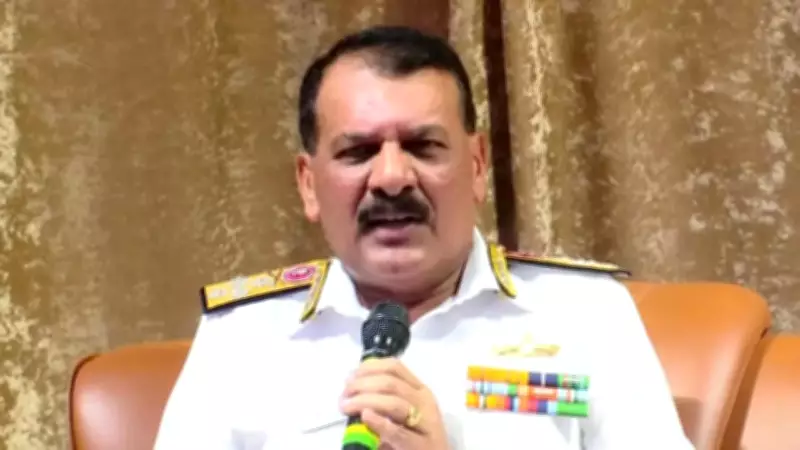
Chief of Naval Staff Admiral Dinesh K Tripathi emphasized that the Indian Navy is closely monitoring the ongoing conflict in West Asia but refrains from drawing definitive lessons at this stage. Speaking at the Ran Samvad 2026 event in Bengaluru, he highlighted the dynamic nature of the conflict and the need for continuous analysis.
Transparency and Vulnerability in Modern Battlespace
Admiral Tripathi pointed out that the most striking aspect of the current conflict is the unprecedented transparency of the battlespace. "Anything that can be seen moving or stationary, is vulnerable," he stated, noting that land, sea, air, and space-based assets are now exposed in ways previously unseen. However, he added that sub-surface platforms like submarines remain less detectable, especially in complex environments such as the Indian Ocean, where salinity and hydroacoustic conditions pose significant challenges.
Resilience Over Invulnerability
The Navy chief stressed that rather than seeking invincibility, the conflict underscores the importance of resilience. He cited the sustained operations of US carrier strike groups, including the USS Abraham Lincoln, as examples of enduring combat capability despite threats. "Every platform is vulnerable. What matters is the balance between the adversary's offensive capability and your defensive strength," he explained.

Carrier and Amphibious Forces Remain Relevant
In response to questions about the vulnerability of aircraft carriers to low-cost drones and asymmetric attacks, Admiral Tripathi rejected notions that their role is diminishing. He asserted that carrier battle groups and amphibious ready groups "do have relevance and purpose," with their employment shaped by operational and strategic contexts. He highlighted that amphibious forces, in particular, carry significant impact and can be reused, as observed in recent deployments.
Speed, Scale, and Simultaneity in Warfare
Admiral Tripathi framed modern warfare around three key attributes: speed, scale, and simultaneity. He referenced the use of AI-enabled targeting systems in West Asia, which compress decision cycles from detection to strike, illustrating a shift from linear kill chains to networked kill webs.
Human Judgment Remains Central
Despite advancements in artificial intelligence and data processing, the Navy chief emphasized that machines cannot replace human decision-making. "Machines can give options. The final decision will remain human," he said, warning of cognitive warfare where adversaries might overload or mislead decision-makers with data.
Indian Navy's Strategic Response
In light of these observations, the Indian Navy is focusing on building a networked, resilient, and integrated force. Key initiatives include:
- Greater use of uncrewed and autonomous systems
- Integration of long-range precision strike and layered defense
- Indigenous combat management systems linking sensors and shooters across domains
- Spiral development for technology induction, iterating on prototypes rather than waiting for perfect solutions
- Enhanced training in cyber, information, and multi-domain operations, incorporated into exercises like TROPEX and tri-services drills
Admiral Tripathi mentioned that doctrine and strategy are being continuously updated, with a revised maritime security strategy expected soon. However, he cautioned against rushing to conclusions, stating, "The correct lessons will come when the time is right."