

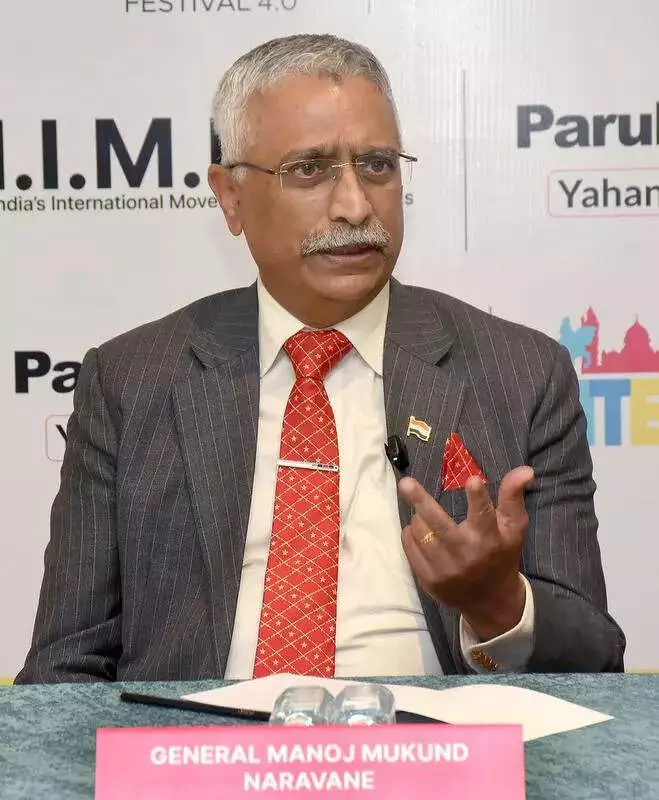
Former Army Chief Gen Naravane Highlights Strategic Shift in India's Counter-Terror Approach
Former Army Chief General Manoj Mukund Naravane, speaking at the Vadodara Literature Fest organized by Parul University, declared that Operation Sindoor marked a fundamental shift in India's counter-terrorism strategy. He emphasized that New Delhi has moved beyond distinguishing between terrorists and their supporters or sponsors, adopting a more comprehensive response framework.
Operation Sindoor: A 100% Successful Mission with Broader Scope
Naravane described Operation Sindoor as "100% successful", noting that India clearly conveyed its strategic message through this operation. He explained that compared to earlier strikes following the Uri and Pulwama attacks—which were primarily focused on terrorist camps—Operation Sindoor significantly widened the scope of India's military response. However, he acknowledged that the real test lies in whether Pakistan chooses to alter its approach toward cross-border terrorism.
India-Pakistan Economic Trajectories: A Stark Divergence
Drawing a compelling historical comparison, Naravane pointed out that India and Pakistan were at similar economic levels during the 1980s. Four decades later, India has ascended to become one of the world's top four economies, while Pakistan has lagged considerably behind. This economic divergence underscores broader strategic realities in the region.

India-China Relations: Dialogue as the Only Viable Path
Addressing India-China relations following the Galwan standoff, Naravane stated that the confrontation reinforced that there is no military solution to the boundary dispute. He asserted, "Dialogue is the only viable option," adding that seasoned foreign diplomats and observers share the view that the world's longest unresolved border dispute could be resolved through discussions if both nations demonstrate genuine intent.
Post-Article 370 Jammu and Kashmir: Security Improvements Documented
Regarding Jammu and Kashmir after the abrogation of Article 370, Naravane cited data showing significant improvements in security indicators. He highlighted reductions in IED incidents, stone-pelting events, and civilian casualties, suggesting positive developments in the region's stability.
Defence Procurement Reforms: Balancing Rigor with Speed
Naravane addressed persistent delays in defence procurement, explaining that the process is necessarily rigorous due to the substantial size of contracts and national security implications. However, he acknowledged the urgent need to accelerate procedures, stating, "In trying to get the best, we often fail to get even the good. It is better to induct usable systems and improve them through spiral development."
He revealed that the upcoming Defence Acquisition Procedure (DAP) will simplify norms for MSMEs and startups by easing bank guarantee and turnover requirements. Naravane also noted that nearly 60% of Army equipment is now indigenous, reflecting progress in domestic defence manufacturing.
Agnipath Scheme: Policies Evolve Through Feedback
On the controversial Agnipath scheme, Naravane remarked that defence policies naturally evolve over time. He indicated that feedback from the armed services would guide any necessary changes to the recruitment program, suggesting a responsive approach to policy implementation.
General Naravane's comprehensive address at the Vadodara Literature Fest provided valuable insights into India's evolving security paradigm, economic standing, and defence modernization efforts.






