

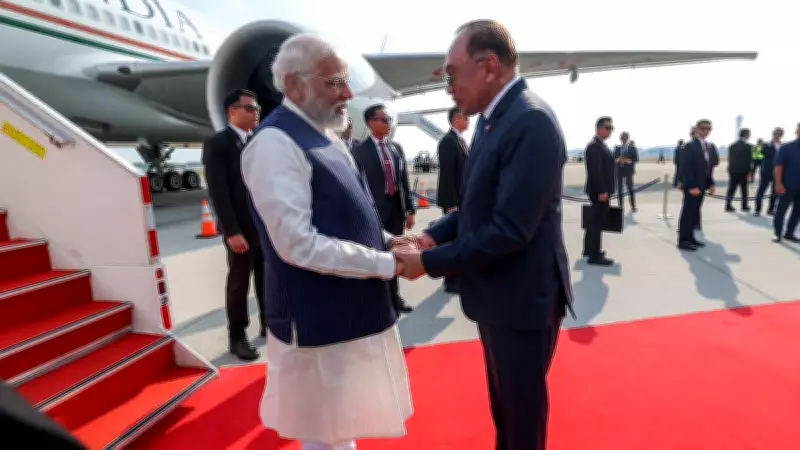
PM Modi's Diplomatic Engagement in Malaysia Sets Stage for Enhanced Strategic Partnership
Prime Minister Narendra Modi arrived in Malaysia for a pivotal official visit, where he was warmly received by his Malaysian counterpart, Prime Minister Anwar Ibrahim. This high-profile diplomatic encounter underscores the commitment of both nations to fortify their bilateral relationship and explore new avenues for strategic alignment across multiple sectors.
Symbolic Gesture of Unity and Collaboration
In a notable display of camaraderie and mutual respect, Prime Minister Modi and Prime Minister Anwar Ibrahim traveled together in the same official vehicle to a special event organized for the Indian community residing in Malaysia. This joint journey symbolized the close personal rapport between the two leaders and highlighted the importance of people-to-people connections in strengthening international ties.
The Indian community event, which served as a focal point of the visit, was graced by the presence of both prime ministers. Prime Minister Anwar Ibrahim's attendance at this gathering emphasized Malaysia's recognition of the significant contributions made by the Indian diaspora to the country's social, economic, and cultural fabric. The event provided a platform for engaging discussions on fostering greater cultural exchange and supporting the community's aspirations.

Foundations for Deeper Strategic Cooperation
This visit is widely viewed as a crucial step towards deepening the strategic partnership between India and Malaysia. Analysts suggest that the discussions between the two leaders likely covered a broad spectrum of issues, including trade and investment, defense collaboration, technology transfer, and regional security concerns. The alignment of interests in the Indo-Pacific region, in particular, presents opportunities for joint initiatives aimed at promoting stability and economic growth.
Economic and trade relations are expected to be a cornerstone of this enhanced partnership. Both countries have expressed interest in expanding bilateral trade, which currently stands at a substantial level, and exploring new areas of cooperation such as digital economy, renewable energy, and infrastructure development. The visit may pave the way for signing new agreements or memoranda of understanding to facilitate these goals.
Cultural and educational exchanges also form a vital component of the bilateral relationship. The leaders likely discussed initiatives to boost student mobility, academic collaborations, and cultural programs that celebrate the shared historical and cultural heritage between India and Malaysia. Such efforts are essential for building long-term goodwill and understanding between the two nations.
Regional Implications and Future Prospects
The strengthening of India-Malaysia ties has significant implications for regional dynamics in Southeast Asia and beyond. As both countries navigate complex geopolitical landscapes, their enhanced cooperation could contribute to a more balanced and multipolar regional order. The visit reinforces India's 'Act East' policy and Malaysia's role as a key partner in this strategic framework.
Looking ahead, the outcomes of this visit are anticipated to include:
- Increased high-level dialogues and ministerial exchanges
- Joint ventures in technology and innovation sectors
- Enhanced defense and security cooperation
- Collaborative efforts in addressing global challenges such as climate change and sustainable development
In conclusion, Prime Minister Modi's visit to Malaysia, marked by the warm reception from Prime Minister Anwar Ibrahim and their joint participation in community events, has successfully laid the groundwork for a more robust and multifaceted strategic partnership. The commitment demonstrated by both leaders promises to bring tangible benefits to their citizens and contribute positively to regional stability and prosperity.






