

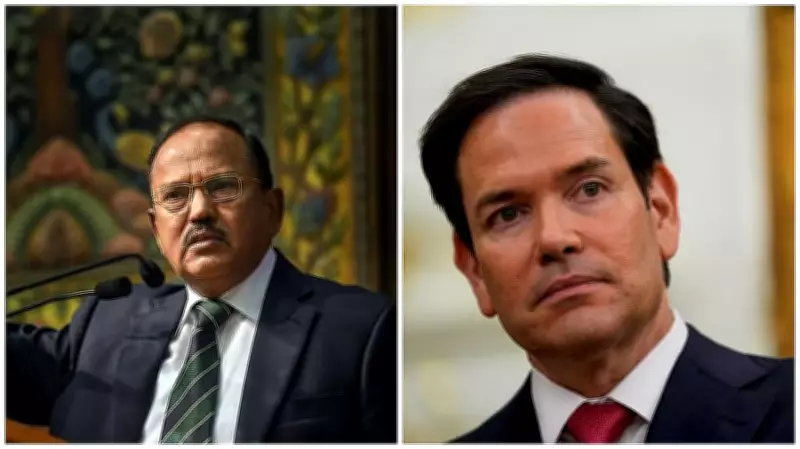
The Ministry of External Affairs (MEA) has categorically rejected a recent media report that alleged National Security Advisor Ajit Doval held a meeting with United States Senator Marco Rubio during a visit to Washington in early September. According to the MEA, this claim is entirely baseless and does not reflect the actual events or diplomatic engagements during that period.
Allegations in the Media Report
The disputed report, which surfaced recently, suggested that Ajit Doval and Marco Rubio convened in Washington D.C. around early September 2025. It further claimed that during this purported meeting, Doval emphasized the need for India and the United States to move past recent tensions and resume negotiations on a bilateral trade deal. The report implied that this interaction was part of efforts to mend relations and foster economic cooperation between the two nations.
MEA's Firm Denial and Clarification
In a strong rebuttal, the MEA has trashed the media report, labeling it as inaccurate and misleading. Official sources within the ministry have clarified that no such meeting took place between Ajit Doval and Marco Rubio during the mentioned timeframe. The MEA emphasized that India's diplomatic engagements are conducted transparently and in accordance with established protocols, and any speculation to the contrary is unfounded.

The ministry's statement underscores its commitment to maintaining factual accuracy in reporting on India's foreign policy and international relations. By dismissing this report, the MEA aims to prevent the spread of misinformation that could potentially impact the perception of India-US bilateral ties.
Context of India-US Relations and Trade Talks
India and the United States have shared a complex relationship, with trade being a significant area of discussion and occasional disagreement. Over the years, both countries have engaged in multiple rounds of trade negotiations, aiming to address issues such as tariffs, market access, and intellectual property rights. However, progress has often been slow, with acrimony surfacing periodically due to differing economic priorities and policies.
The alleged meeting, as reported, would have suggested a high-level effort to overcome these hurdles and reinvigorate trade talks. Given the strategic importance of the India-US partnership, such developments are closely watched by analysts and stakeholders. However, the MEA's denial indicates that no official initiative of this nature occurred in September, leaving the status of trade negotiations unchanged.
Implications for Bilateral Diplomacy
This incident highlights the challenges of managing public narratives in international diplomacy. False or unverified reports can create unnecessary speculation and strain diplomatic efforts. The MEA's prompt response serves to clarify the record and reinforce the authenticity of India's diplomatic communications.
It also reflects the ministry's proactive approach in addressing media inaccuracies, ensuring that India's stance on key issues like trade with the US is not misrepresented. As both nations continue to navigate their economic and strategic partnership, accurate reporting remains crucial for fostering mutual understanding and cooperation.
In conclusion, while the idea of a Doval-Rubio meeting to discuss trade might have sparked interest, the MEA's firm denial confirms that it did not happen. This underscores the importance of relying on official sources for information on sensitive diplomatic matters.






