

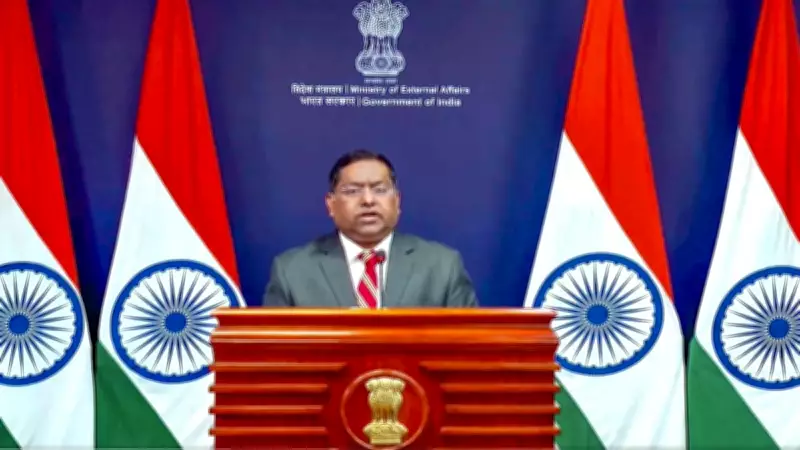
MEA Denounces Bloomberg's Unfounded Report on Alleged Doval-Rubio Meeting
In a sharp rebuttal, the Ministry of External Affairs (MEA) of India has categorically denied a recent Bloomberg news report that claimed a meeting took place between National Security Advisor Ajit Doval and United States Senator Marco Rubio. The MEA has labeled the report as completely baseless and without any factual foundation, issuing a strong statement to clarify the matter.
Background of the Controversial Media Report
The Bloomberg article, published recently, suggested that NSA Ajit Doval and Senator Marco Rubio, a prominent Republican figure from Florida, had engaged in discussions. This report emerged amidst ongoing buzz and speculation surrounding India-US trade relations and diplomatic engagements between the two nations. The timing of the article has raised eyebrows, as it comes when both countries are navigating complex trade negotiations and strategic partnerships.
According to sources, the report did not provide any verifiable evidence or official confirmation to support its claims. It appears to have relied on unnamed sources or speculative information, which the MEA has now firmly rejected. The ministry emphasized that no such meeting ever occurred, and the report is a fabrication that could potentially mislead public perception and disrupt diplomatic communications.

MEA's Strong Response and Implications
The MEA's swift and unequivocal denial underscores the importance of accurate journalism, especially in matters of international diplomacy and national security. In its statement, the ministry highlighted that spreading unverified information can have serious consequences, including:
- Creating unnecessary confusion and misinformation among stakeholders.
- Potentially straining bilateral relations between India and the US.
- Undermining the credibility of media outlets that publish such reports.
This incident serves as a reminder of the critical role that responsible reporting plays in global affairs. The MEA has urged media organizations to exercise due diligence and verify facts before publishing stories that involve high-level diplomatic interactions. The ministry's stance is clear: it will not tolerate baseless allegations that could impact India's foreign policy or its relationships with key allies like the United States.
Context of India-US Relations and Trade Buzz
The denial comes at a time when India and the US are actively engaged in discussions to enhance their trade and economic cooperation. Both nations have been working towards resolving trade disputes and exploring new avenues for collaboration in areas such as technology, defense, and healthcare. The false report about a Doval-Rubio meeting could have been seen as an attempt to influence or speculate on these sensitive negotiations.
NSA Ajit Doval is a key figure in India's security and diplomatic circles, often involved in high-stakes talks with international counterparts. Similarly, Senator Marco Rubio is known for his influence in US foreign policy, particularly regarding Indo-Pacific strategies. Any alleged meeting between them would have significant implications, making the MEA's clarification all the more crucial to maintain transparency and trust.
In conclusion, the MEA's firm rejection of the Bloomberg report reinforces the need for media integrity in covering diplomatic events. As India and the US continue to strengthen their partnership, accurate and fact-based reporting will be essential to support constructive dialogue and mutual understanding between the two democracies.






