Jaishankar Engages in Diplomatic Dialogue with Iranian Foreign Minister
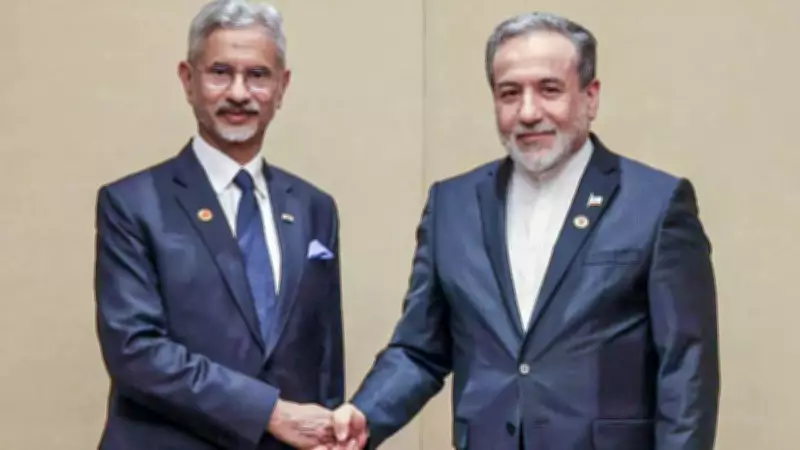
External Affairs Minister S Jaishankar received a significant telephone call from his Iranian counterpart, Abbas Araghchi, on Sunday as geopolitical tensions continue to intensify across the Middle Eastern region. The high-level diplomatic exchange occurred against a backdrop of escalating threats and military posturing from multiple international actors.
Details of the Crucial Diplomatic Exchange
"Received a call from Foreign Minister Abbas Araghchi of Iran. Discussed the present situation," confirmed Jaishankar in a brief statement following their conversation. While specific operational details of their discussion remain confidential, the Iranian Embassy in India provided additional context regarding the nature of their dialogue.
The Embassy officially stated on social media platform X: "Seyed Abbas, Foreign Minister of the Islamic Republic of Iran, held a phone conversation with Subrahmanyam Jaishankar, India's Minister of External Affairs, discussing bilateral relations as well as regional and international developments."

Series of Diplomatic Engagements Preceding the Call
Prior to his conversation with the Iranian Foreign Minister, Jaishankar had already engaged in multiple diplomatic exchanges with key leaders from Middle Eastern nations. These included discussions with:
- UAE Deputy Prime Minister and Foreign Minister Abdullah bin Zayed Al Nahyan
- Qatar Prime Minister Mohammed bin Abdulrahman bin Jassim Al Thani
Similar to the Iran conversation, comprehensive details regarding these diplomatic exchanges have not been publicly disclosed by Indian authorities, maintaining strategic ambiguity about the specific content and outcomes of these critical discussions.
Trump's Aggressive Ultimatum and Military Threats
The diplomatic conversations occur within a particularly volatile context, as former US President Donald Trump has issued a dramatic 48-hour deadline demanding Iran open the strategically vital Strait of Hormuz. Trump has threatened severe military retaliation should Iran fail to comply with his demands by the specified deadline.
In a characteristically provocative social media post, Trump declared: "Tuesday will be Power Plant Day, and Bridge Day, all wrapped up in one, in Iran. There will be nothing like it!!! Open the F*****' Strait, you crazy b******s, or you'll be living in Hell - JUST WATCH! Praise be to Allah."
Contradictory Statements from Trump Regarding Potential Agreement
In a subsequent interview with Fox News, Trump presented a seemingly contradictory position, suggesting there remained "a good chance" that a diplomatic agreement could be reached with Iran by Monday. However, he immediately followed this optimistic assessment with renewed threats, warning that failure to reach an agreement would result in catastrophic consequences.
"If they don't reach an agreement, I'll blow everything up and take over the oil," Trump declared during the interview, further escalating tensions with his characteristically aggressive rhetoric toward the Iranian government.
Strategic Importance of the Strait of Hormuz
The Strait of Hormuz represents one of the world's most critical maritime chokepoints, through which approximately one-fifth of global oil consumption passes annually. Any disruption to shipping through this narrow waterway would have immediate and severe consequences for global energy markets and international trade flows.
India maintains significant strategic interests in the region, with substantial energy imports passing through the Strait of Hormuz and important bilateral relationships with multiple Middle Eastern nations, making diplomatic engagement particularly crucial during this period of heightened tension.
The timing of these diplomatic exchanges suggests coordinated international efforts to de-escalate tensions before potential military confrontation, though the specific outcomes and next steps remain closely guarded by participating governments.