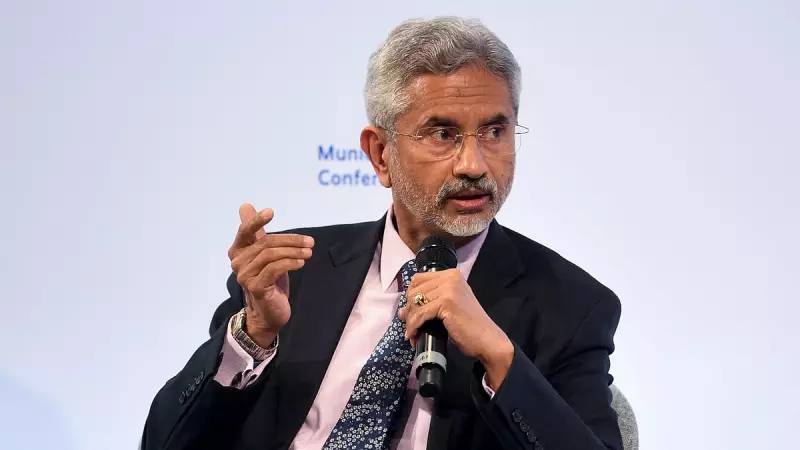
External Affairs Minister Dr. S. Jaishankar has presented a powerful argument for strengthening international cooperation, stating that the ongoing shift towards a more multipolar global order makes a compelling case for deeper multilateral engagement. His remarks underscore India's evolving role as a significant contributor to global heritage and diplomatic frameworks.
The Imperative for Enhanced Multilateral Cooperation
Speaking on the international stage, Jaishankar emphasized that the world's transition into a phase with multiple centers of power and influence is not a reason for fragmentation. Instead, he positioned this multipolar reality as a fundamental driver for more robust and inclusive multilateral systems. The minister suggested that complex global challenges, from climate change to economic stability, require collective solutions that can only be forged through renewed commitment to international institutions and dialogue.
India's Dual Role: Custodian and Global Contributor
Jaishankar highlighted India's unique position, not merely as a participant in global affairs but as an active preserver of shared human heritage. He pointed out that India is home to a vast number of UNESCO World Heritage Sites, acknowledging its responsibility in safeguarding these cultural and natural treasures.
Beyond its borders, the minister detailed how India has proactively undertaken numerous preservation and conservation projects across the world. This global outreach, often part of its development partnership, demonstrates a commitment to protecting universal heritage and fostering cultural bonds. These initiatives serve as a practical manifestation of India's belief in vasudhaiva kutumbakam (the world is one family) and its willingness to shoulder global responsibilities.
Implications for Global Governance and Diplomacy
The minister's comments, made on December 7, 2025, reflect a strategic vision for India's foreign policy in a changing world. By linking the structural shift to multipolarity with the need for deeper multilateralism, Jaishankar is articulating a path forward that balances national interest with global good. This approach positions India as a bridge-builder and a proactive stakeholder in shaping the rules and norms of the emerging world order, leveraging both its civilizational legacy and its contemporary technical and diplomatic capabilities.
The emphasis on tangible conservation work worldwide also adds a soft-power dimension to India's diplomatic toolkit, showcasing its role as a benevolent and capable global partner invested in the common heritage of humanity.