Jaipur Literature Festival Sparks Debate on Global Power Shifts
The Jaipur Literature Festival hosted a compelling session titled "New World Order" on Monday. Political thinkers and writers gathered to dissect recent international events. They argued that restrained reactions to US actions reveal deep cracks in the global rules-based system.
Muted Responses Signal Deeper Fractures
Political philosopher Oscar Guardiola-Rivera made a striking observation. He noted India's notably muted response to recent US actions in Venezuela. Official reactions placed little emphasis on international rule of law. This restraint was mirrored across Europe, a development that caught significant attention in Latin America.
"For many in Latin America, the silence was striking—not just from India, but from Europe as well," Guardiola-Rivera stated. He explained the regional perception clearly. If the United States seeks to reassert influence over its traditional "backyard", that sphere no longer seems limited to Latin America alone.

Guardiola-Rivera issued a clear warning. "Europe is increasingly being drawn into that orbit," he said. Many European capitals appear slow to recognize the full implications. He referenced recent geopolitical rhetoric, suggesting what began with talk of influence over Latin America could extend much further.
"When former President Trump says it could be Cuba, it could be Colombia—what follows next? We already saw signals with places like Greenland," he remarked. This points toward a broader challenge to established norms of national sovereignty.
Predicting a Complex Future World Order
Former UK politician Vince Cable reacted to discussions about the new world order. He admitted the shape of the coming global system is difficult to predict precisely. However, he emphasized it will be impossible to ignore.
"What new kinds of order come out of this is very hard to foresee, but it is certainly going to be very interesting—and terrifying," Cable told the audience. Looking ahead two or three decades, he made specific predictions about global power structures.
Cable foresees the emergence of three major economic superpowers:
- China
- India
- The United States
Alongside these giants, he highlighted influential middle powers that often escape sufficient attention. "Countries like Indonesia, Turkey and Brazil will matter much more than we currently acknowledge," Cable asserted.
A Looser System Driven by Necessity
Cable argued that the future world order will not resemble the post-war Old World Order. Instead, he described a looser system driven primarily by necessity. "There will have to be cooperation because of compulsions," he explained.
He used climate change as a prime example. "On climate change, for example, cooperation is existential and simply sensible—governments will act because they have to," Cable stated. This necessity will force collaboration even among competing powers.
Describing this evolving framework, Cable introduced the concept of "variable geometry". In this model, alliances and partnerships shift dynamically depending on the specific issue at hand. "There will be many variables, many arrangements—but that is the kind of world we are heading into," he concluded.
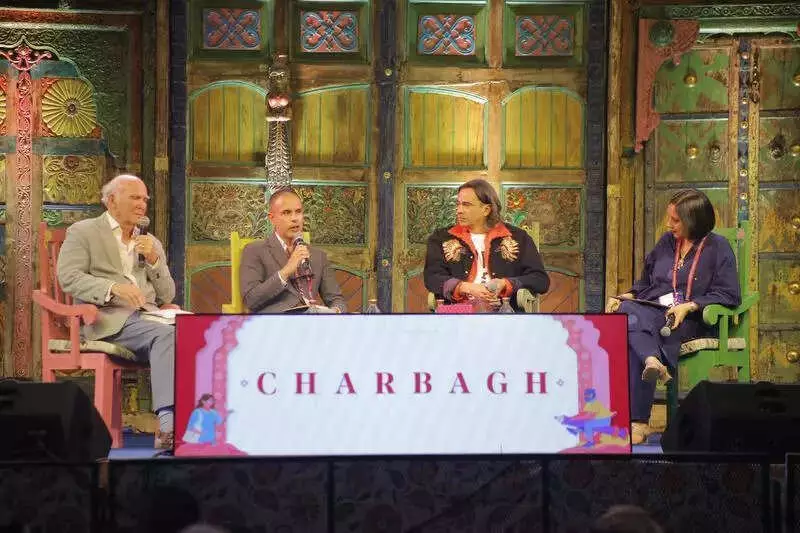
The session featured political philosopher Oscar Guardiola-Rivera, former UK politician Vince Cable, and writer Rana Dasgupta. Journalist Suhasini Haider skillfully moderated the conversation. Together, they painted a picture of a global order in significant flux, with particular vulnerabilities emerging for Europe and traditional power structures facing unprecedented challenges.