Israel's Early Plans to Assassinate Ayatollah Ali Khamenei Revealed by Defence Minister
In a startling revelation, Israeli Defence Minister Katz disclosed on Thursday that plans to assassinate Iran's Supreme Leader Ayatollah Ali Khamenei were scheduled as early as November 2025. Prime Minister Benjamin Netanyahu had orchestrated this mission within a "very small forum," indicating a highly secretive operation aimed at targeting the Iranian leadership.
Timeline Accelerated Amidst Anti-Regime Protests
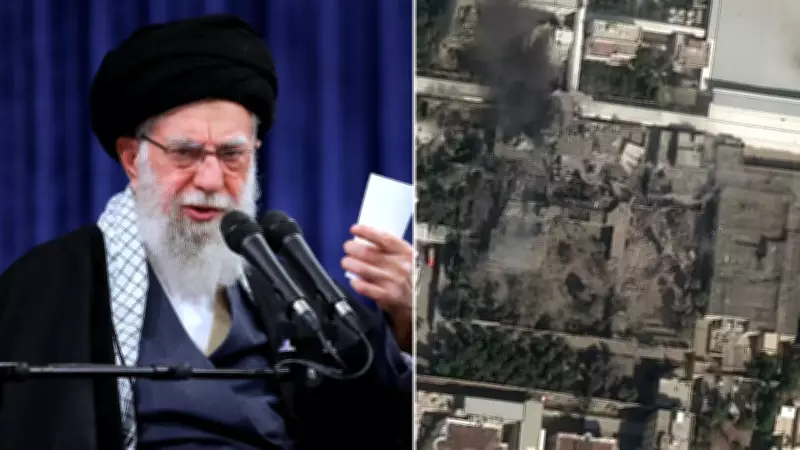
Katz explained that the initial timeline for the strike was set for mid-2026, possibly in June, but was accelerated due to massive anti-regime protests that erupted across Iran at the end of December. These protests, which plunged the Islamic Republic into chaos, created favourable conditions for Israel and the United States to execute the operation. Khamenei was ultimately killed on the last day of February during a high-intensity military campaign launched by Israel and the U.S.
The defence minister made these statements during interviews with Hebrew-language media outlets, including Channel 12. He detailed how a select group of officials held talks with Netanyahu in November 2025, discussing the possibility of assassinating Khamenei. This operation was later carried out on Saturday, marking the first day of the current U.S.-Israeli campaign against Iran.

Surprise and Urgency from Unrest
Katz noted that both Israel and the United States were surprised by the scale of the anti-government protests, which reportedly led to thousands of demonstrators being killed by regime forces. This unrest raised serious security concerns, as Israel feared the Iranian leadership might launch a pre-emptive missile strike on Israel and American forces in the region before they could act.
"It surprised everyone. The unrest didn't just create an opportunity, there was also serious concern at the time that, because of the pressure on the regime from the protests, the regime might launch a preemptive missile strike on Israel and on American forces in the region," Katz stated.
Joint Planning with the United States
Amid these developments, discussions about removing the Iranian leadership began between Washington and Jerusalem. Katz revealed that both countries agreed on cooperation in defining the objectives of an operation against Iran, including creating conditions for the Iranian people to overthrow the regime. Coordination expanded into joint operational planning, with Katz rejecting suggestions of pressure between the allies, emphasizing independent assessments of the threat posed by Iran.
Praising Netanyahu, Katz said, "the only person in the world, the only leader who could have created such cooperation with President Trump, is Benjamin Netanyahu."
Broader Military Objectives and Regime Change
When questioned about renewed conflict with Iran, Katz defended earlier operations that targeted Iran's nuclear and missile programs, stating Israel was acting to prevent Iran from rebuilding these capabilities. He outlined the current military campaign's goals, which include:
- Destroying Iran's ability to return to its nuclear program.
- Eliminating its ballistic missile production capacity.
- Ending support for regional proxy groups.
- Enabling the Iranian people to potentially overthrow the regime.
Katz expressed hope that the conflict would end with the Iranian people overthrowing the regime, but noted this outcome depends on the population. The U.S. has aligned with these objectives, with President Trump urging the Iranian public to "take over your government" once military operations conclude.
Context of Ongoing Conflict
This revelation comes amidst a seven-day war between the U.S., Israel, and Iran, with updates including Iran's criticism of the U.S. after a torpedo sank warship IRIS Dena, and hints at "unseen" weapons from Iran. The conflict has intensified strikes, with the U.S. providing India a 30-day waiver to purchase Russian oil amid the Middle East crisis.
Katz's disclosures shed light on the strategic planning behind the assassination, highlighting how geopolitical tensions and internal unrest in Iran influenced the accelerated timeline and joint efforts with the United States.