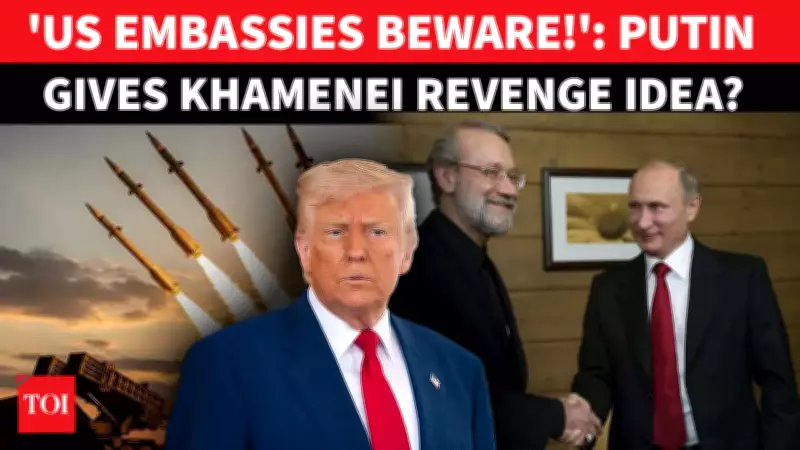
Iran Issues Stark Warning to US Embassies Amid High-Stakes Putin Meeting
Geopolitical tensions between Washington and Tehran have escalated dramatically, with Iran reportedly issuing a chilling warning that American embassies across the Middle East could become potential targets if the United States initiates military action. This development comes as Iran's top security official, Ali Larijani, conducted urgent regional consultations and held a significant meeting with Russian President Vladimir Putin in Moscow, fueling intense speculation about shifting alliances and strategic maneuvers.
Diplomatic and Military Posturing Intensifies
The situation is unfolding against a backdrop of heightened military activity and diplomatic strain. On one side, the United States has continued its naval deployments in strategic waters, with President Donald Trump advocating for negotiations while explicitly maintaining military options as a viable contingency. Simultaneously, Iran has been conducting its own naval drills, creating a volatile environment where both nations appear to be testing each other's resolve and preparedness.
American embassies throughout the region have reportedly been placed on high alert, implementing enhanced security protocols in response to the perceived threat. This precautionary measure underscores the seriousness with which US officials are treating Iran's warnings, reflecting concerns that the longstanding standoff could rapidly deteriorate into open conflict.

The Moscow Meeting and Regional Implications
Ali Larijani's meeting with Vladimir Putin in Moscow represents a crucial diplomatic development that has captured global attention. As a key aide to Iran's Supreme Leader Ayatollah Ali Khamenei, Larijani's discussions with the Russian leader are seen as potentially signaling strengthened cooperation between Tehran and Moscow, two nations that have often found common ground in opposing US foreign policy initiatives in the Middle East.
This high-level engagement occurs amid reports that Larijani has been conducting urgent consultations with regional partners, suggesting Iran is actively building diplomatic support and coordinating responses as tensions with the United States reach new heights. The timing of these diplomatic efforts, coinciding with military posturing from both sides, indicates a calculated strategy from Tehran to demonstrate both defensive capability and international backing.
A Dangerous Phase in US-Iran Relations
Analysts observing the situation describe the current standoff as entering an exceptionally dangerous phase where miscalculation or misinterpretation of intentions could trigger broader regional conflict. Several factors contribute to this precarious situation:
- Military deployments by both nations create physical proximity that increases accident risks
- Diplomatic channels appear strained, reducing communication clarity
- Public warnings like those regarding embassy security raise stakes publicly
- Third-party involvement through meetings like the Putin-Larijani engagement adds complexity
President Trump's approach of combining negotiation overtures with maintained military readiness reflects the administration's "maximum pressure" strategy toward Iran, but also creates ambiguity about American intentions that could contribute to misunderstanding. Meanwhile, Iran's warning about embassy vulnerabilities represents a clear attempt to establish red lines and deter potential US military action through the threat of asymmetric retaliation.
The coming weeks will likely prove critical as both nations navigate this tense period, with the international community watching closely for signs of escalation or potential diplomatic breakthroughs that could defuse the situation before it spirals into open confrontation.