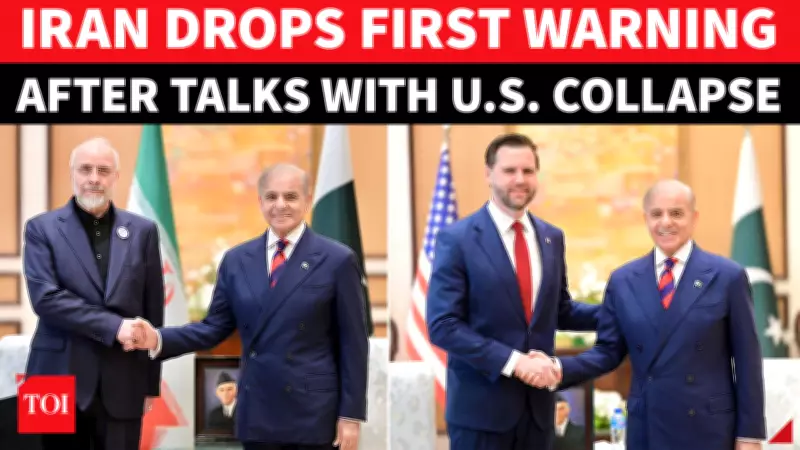
Iran Delivers Uncompromising Warning to US After Islamabad Negotiations Fail
Iran has issued a firm and unequivocal warning to the United States following marathon diplomatic talks in Islamabad that concluded without any significant breakthrough. The high-stakes negotiations, which took place on April 11, were mediated by Pakistan and focused on several critical geopolitical issues, but ultimately ended in deadlock.
Iranian Spokesperson Criticizes US Approach
Iranian Foreign Ministry spokesperson Esmaeil Baqaei characterized the discussions as "intensive" but emphasized that any future progress depends entirely on Washington demonstrating "seriousness and good faith." Baqaei explicitly warned against what he described as "excessive demands and unlawful requests" from the United States, while strongly urging American officials to respect Iran's "legitimate rights and interests."
The Iranian spokesperson renewed sharp criticism of past American actions, specifically referencing what Tehran views as "breaches of promise" by previous US administrations. Additionally, Baqaei accused Israel of committing "heinous crimes" in the region, highlighting the deep-seated mistrust that continues to shape diplomatic relations between Iran and Western powers.

Key Negotiation Points That Remained Unresolved
The extensive discussions covered multiple flashpoints that have long strained US-Iran relations:
- The strategic Strait of Hormuz: A crucial waterway for global oil shipments where tensions have frequently escalated
- Iran's nuclear program: The centerpiece of international concerns and sanctions
- Sanctions relief: Tehran's primary demand for economic normalization
- War reparations: Financial compensation for conflicts in the region
- Regional conflict resolution: A broader framework for ending hostilities across the Middle East
Vance Returns to United States Without Agreement
The failure of these negotiations means that US envoy J.D. Vance returned to Washington empty-handed, without securing any substantive agreements or concessions from Iranian officials. This outcome represents a significant diplomatic setback for the United States, which had hoped to make progress on several fronts through these Pakistan-mediated talks.
The stalemate underscores the profound challenges facing US-Iran relations, with both sides maintaining fundamentally different positions on core issues. Iran's warning about "excessive demands" suggests that Tehran views current American proposals as unrealistic or unacceptable, while Washington likely perceives Iranian positions as equally inflexible.
This diplomatic impasse occurs against a backdrop of heightened regional tensions, with multiple conflicts and proxy wars continuing to destabilize the Middle East. The failure to reach any agreement in Islamabad means these tensions are likely to persist, with potential implications for global energy markets and international security.