

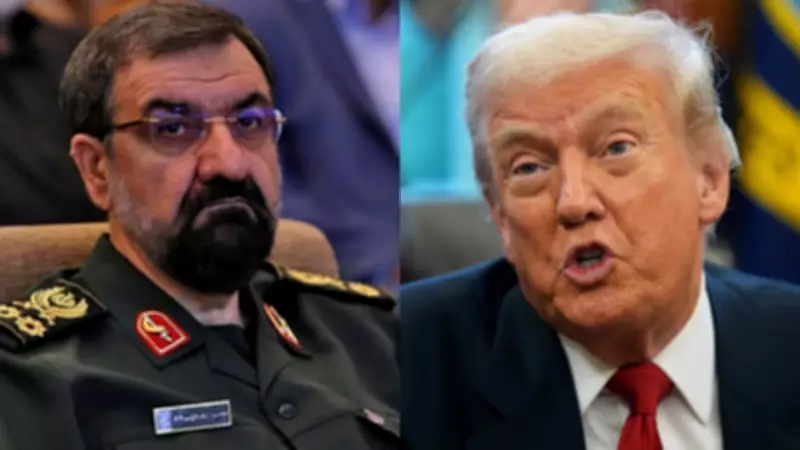
Iran Issues Stark 'Eye for a Head' Warning to Donald Trump Amid Escalating Tensions
Iran has delivered a chilling warning to former US President Donald Trump, declaring that any American attack on Iranian infrastructure would trigger a response far beyond proportional retaliation. Senior Iranian officials have explicitly stated that the conflict would escalate from "an eye for an eye" to "an eye for a head, a hand, and a foot," signaling a dramatic hardening of Tehran's position as regional tensions continue to mount.
Iran's Hardened Negotiating Stance and Core Demands
According to reports from Iran's Fars news agency, former Islamic Revolutionary Guard Corps commander Mohsen Rezaei articulated Tehran's uncompromising position. Rezaei emphasized that the war would persist until Iran receives full compensation for all damages incurred and sees comprehensive sanctions lifted. Furthermore, Iran demands ironclad international guarantees against future US interference in its internal affairs.
"This is a decision of our country's people, Supreme Leader, and armed forces," Rezaei declared, underscoring the unified stance within Iran's power structure. The warning about disproportionate retaliation specifically targets potential US attacks on Iranian infrastructure, with Rezaei ominously predicting that "America will be paralyzed" if such actions occur.

Regional Developments and Gulf Allies' Positioning
As Iran issues these stark warnings, regional dynamics continue to shift dramatically. Saudi Arabia has reportedly granted the United States access to military bases, while the United Arab Emirates has taken steps to shut down Iranian assets within its jurisdiction. These moves suggest Gulf allies are gradually edging closer to direct involvement in the conflict, potentially expanding the theater of operations beyond the immediate US-Iran-Israel triangle.
Meanwhile, technical disruptions have been reported, with Amazon Web Services experiencing operational issues following a drone attack in Bahrain. Although not directly attributed to the conflict, such incidents highlight how regional instability can have cascading effects on global infrastructure and commerce.
Diplomatic Maneuvers and Contradictory Claims
Despite the bellicose rhetoric, diplomatic channels appear to remain active, albeit with conflicting narratives emerging from Washington and Tehran. Donald Trump claimed on Monday that "major points of agreement" had been reached with Iran following weekend discussions, suggesting progress in negotiations. The former US president further revealed that both sides were discussing a comprehensive 15-point framework designed to bring the conflict to an end.
However, Trump's characteristically mixed messaging included the caveat that if talks faltered, "we just keep bombing our little hearts here." This juxtaposition of diplomatic optimism and military threat underscores the volatile nature of current negotiations.
Iran's Denial of Direct Engagement and Strategic Demands
Contradicting Trump's claims of productive dialogue, Iranian officials have publicly denied any direct engagement with Washington more than three weeks into the ongoing conflict. Tehran has instead outlined non-negotiable prerequisites for any peace talks, including an immediate cessation of hostilities and formal Iranian control over the strategically vital Strait of Hormuz.
The White House has characterized the situation as "sensitive" and "fluid," acknowledging the complex diplomatic landscape. As these diplomatic maneuvers unfold, global markets have reacted nervously, with oil prices experiencing significant volatility amid concerns about potential supply disruptions through critical Middle Eastern shipping lanes.
Broader Implications and Future Trajectory
Iran's "eye for a head" warning represents a significant escalation in rhetoric that could potentially reshape conflict dynamics. By explicitly threatening disproportionate retaliation, Tehran aims to deter US military action while strengthening its bargaining position in any future negotiations. The demand for compensation, sanction relief, and strategic guarantees reflects Iran's determination to emerge from the conflict with tangible gains rather than mere cessation of hostilities.

As regional allies position themselves and diplomatic efforts continue amid contradictory claims, the situation remains dangerously fluid. The coming days will likely reveal whether Iran's hardened stance represents genuine strategic recalibration or tactical positioning ahead of more substantive negotiations.





