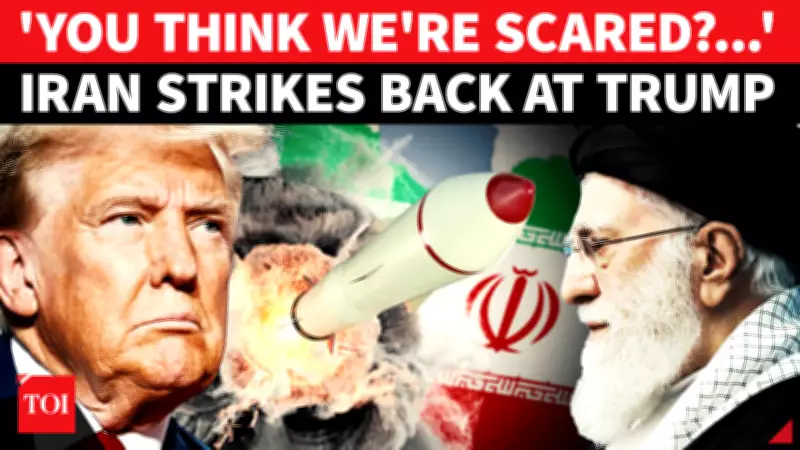
Iran Issues Stark Warning to US Over Military Buildup as Nuclear Negotiations Continue
Iran has issued a forceful warning to the United States, threatening a robust and decisive retaliation if faced with any hostile military action. The stark declaration comes amid a significant escalation in regional tensions, as the US confirms plans to bolster its naval presence in the Middle East.
IRGC Admiral Vows Strong Response to Any Hostility
Rear Admiral Ali Shamkhani, a senior commander of Iran's Islamic Revolutionary Guard Corps (IRGC), has explicitly stated that the country's military forces remain on high alert and fully prepared. He emphasized that Iran will deliver a "strong, decisive, and appropriate" response to any aggressive move by the United States or its allies. This statement underscores Tehran's commitment to defending its sovereignty and regional interests against perceived external threats.
US Military Deployment Intensifies Regional Standoff
The Iranian warning is a direct reaction to recent announcements from Washington. President Donald Trump has confirmed the deployment of a second US aircraft carrier group to the Middle East, a move described as strengthening American leverage in the ongoing nuclear negotiations with Iran. While expressing hope that a diplomatic agreement can still be achieved, the military buildup signals a strategy of applying maximum pressure alongside talks.

This development highlights the complex and volatile nature of US-Iran relations, where diplomatic efforts are increasingly shadowed by military posturing and rhetorical exchanges. The presence of additional US naval assets in the region is viewed by Tehran as a provocative act, potentially destabilizing the already fragile security environment.
Nuclear Talks Proceed Amid Rising Tensions
The escalating military dynamics occur as diplomatic negotiations concerning Iran's nuclear program continue. Both nations are engaged in a delicate balancing act, attempting to advance talks while simultaneously demonstrating military readiness. The situation reflects a broader pattern of heightened rhetoric and strategic signaling, where each side aims to strengthen its position at the bargaining table.
Analysts note that such military deployments and public warnings could either pressure concessions or risk derailing the diplomatic process entirely. The international community watches closely, as any miscalculation or incident could lead to a significant confrontation with far-reaching consequences for regional and global stability.
In summary, Iran's explicit threat of retaliation against potential US attacks marks a critical juncture in the bilateral relationship. As Washington enhances its military footprint and Tehran reaffirms its defensive capabilities, the path forward for nuclear diplomacy remains fraught with uncertainty and the ever-present risk of escalation.