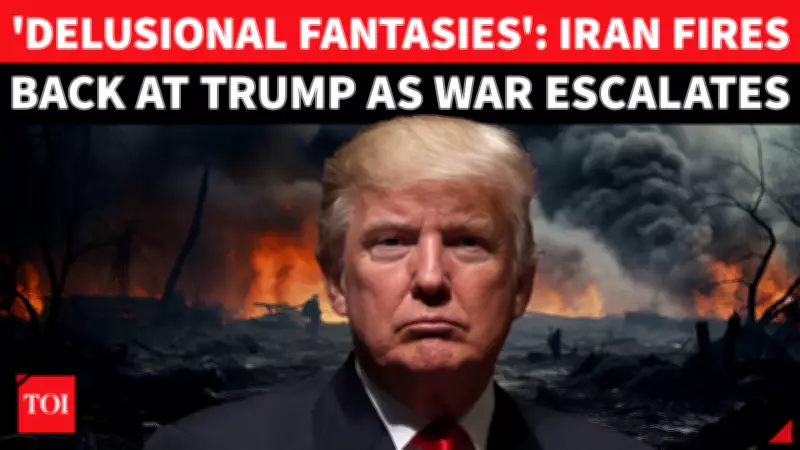
Iran's Top Security Official Firmly Rejects Nuclear Negotiations With United States
In a definitive statement that underscores the ongoing geopolitical tensions, a senior Iranian official has categorically dismissed recent American media reports suggesting renewed efforts for nuclear talks between Iran and the United States. Ali Larijani, the Secretary of Iran's National Security Council, delivered a strongly worded rebuke, effectively ruling out any possibility of negotiations at this time.
Larijani Accuses Trump of Destabilizing the Region
Larijani's remarks included pointed criticism directed at former U.S. President Donald Trump, whom he accused of plunging the entire Middle East region into a state of chaos and instability. The Iranian official framed his country's current military posture as purely defensive, stating that Iran is merely defending itself against external aggression and hostile actions.
"We are not the initiators of this conflict," Larijani insisted, directly countering claims that Iran has been the primary aggressor. "Our armed forces are engaged in legitimate responses to attacks against our sovereignty and interests." This assertion positions Iran's recent military activities, including air attacks in the Gulf region, as reactive measures rather than offensive operations.

Media Reports of Omani Mediation Dismissed
The timing of Larijani's statement is particularly significant, coming shortly after various international media outlets published reports suggesting diplomatic outreach through Oman. Oman has historically served as a mediator between Iran and Western nations, including the United States, facilitating backchannel communications during periods of heightened tension.
However, Larijani's unequivocal dismissal of negotiation prospects appears to contradict these reports, indicating that Iran's current leadership remains firmly opposed to engaging in nuclear diplomacy with Washington. This stance reflects the deep-seated mistrust that has characterized Iran-U.S. relations, particularly following the Trump administration's withdrawal from the 2015 nuclear agreement and subsequent imposition of severe economic sanctions.
Broader Context of Regional Escalation
The rejection of talks occurs against a backdrop of escalating military confrontations across the Middle East. Recent developments include:
- Iran stepping up air attacks in the Gulf region
- Missile bombardments targeting Israeli cities
- Attacks on U.S. military bases and naval assets
- Regional protests and consulate stormings in response to Iranian leadership actions
Larijani's statement reinforces Iran's official narrative that it is acting in self-defense while portraying the United States and its allies as the primary instigators of regional conflict. The language used—"don't be delusional" regarding negotiation prospects—signals both defiance and a clear message that Iran sees little diplomatic opportunity with the current U.S. political landscape, even as Trump signals openness to talks.
This development represents another setback for international efforts to de-escalate tensions in the volatile Middle East region, where the prospect of broader conflict continues to loom large. The firm rejection of nuclear negotiations suggests that military posturing and regional proxy conflicts may continue to define Iran-U.S. relations in the near term, with diplomatic channels remaining largely closed despite occasional mediation attempts by third parties like Oman.