

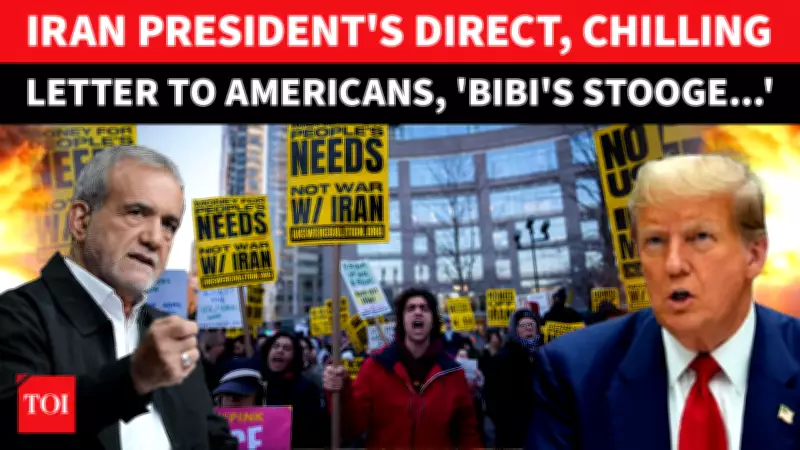
Iranian President's Direct Appeal to American Public in Open Letter
In a remarkable diplomatic maneuver, Iranian President Masoud Pezeshkian has bypassed traditional government channels to communicate directly with the American people through an open letter released on April 1. The unprecedented move comes during escalating geopolitical tensions between Tehran and Washington, with the Iranian leader choosing to address foreign citizens rather than his own nation during this critical period.
Questioning American Priorities and Allegiances
President Pezeshkian's message, published through Iran's state-affiliated Press TV, poses fundamental questions about United States foreign policy direction. The Iranian leader specifically challenges whether American actions in the region genuinely serve US national interests or primarily benefit Israel. This direct questioning of Washington's strategic priorities represents a significant departure from conventional diplomatic communication between the two nations.
The letter draws a clear distinction between government policies and ordinary citizens, with Pezeshkian emphasizing that despite decades of political conflict and hostility between their governments, the Iranian people maintain no animosity toward American citizens. This separation of people from policy appears strategically designed to cultivate understanding and potentially shift American public opinion regarding Iran.

Strategic Timing and Diplomatic Implications
The publication timing is particularly significant, coinciding with heightened tensions following recent military incidents involving US forces in the region. By addressing Americans directly during this volatile phase, Pezeshkian appears to be attempting an end-run around official diplomatic channels that have remained largely frozen between the two countries.
This unconventional approach represents a sophisticated public diplomacy strategy aimed at influencing American domestic discourse on foreign policy. Rather than engaging solely with US government officials, the Iranian president has chosen to appeal directly to the American electorate, potentially calculating that public pressure could influence Washington's policy decisions.
Context of Regional Geopolitical Tensions
The open letter emerges against a backdrop of:
- Ongoing proxy conflicts throughout the Middle East
- Recent military engagements involving US forces and Iranian-backed groups
- Persisting nuclear negotiations stalemate
- Regional power struggles involving multiple state and non-state actors
Analysts suggest this direct public communication represents Iran's recognition of the importance of American public opinion in shaping US foreign policy. By framing the conflict as one between governments rather than peoples, Pezeshkian attempts to create space for diplomatic maneuvering while maintaining Iran's regional positions.
Potential Impact and Reception
The effectiveness of this diplomatic approach remains uncertain, as American public opinion toward Iran has been largely negative for decades. However, the direct appeal does represent a novel strategy in Iran-US relations, potentially opening new avenues for communication even as official channels remain constrained.
The letter's publication through Press TV ensures maximum visibility within Iran's media ecosystem while also reaching international audiences. This dual-track approach allows the Iranian government to communicate with both domestic and foreign audiences simultaneously, presenting a unified message despite the complex geopolitical realities facing the region.






