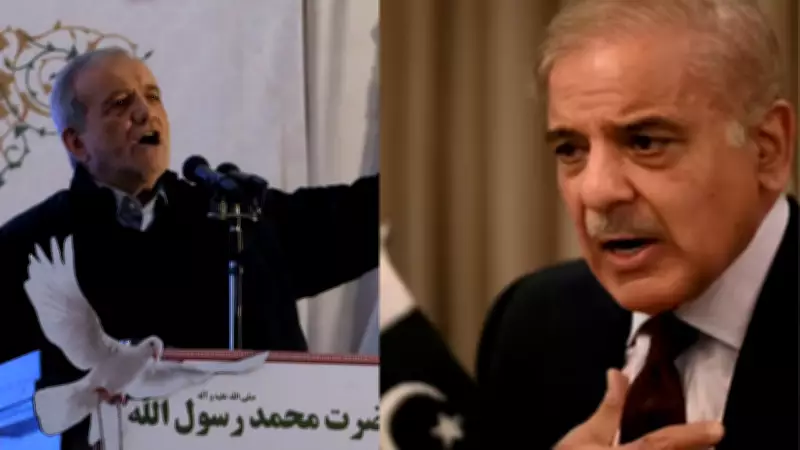
Iranian President Calls for International Investigation in Diplomatic Exchange with Pakistan
In a significant diplomatic development, Iranian President Masoud Pezeshkian and Pakistan's Prime Minister Shehbaz Sharif engaged in a telephone conversation to address the rapidly escalating military situation across the Middle East region. During this critical dialogue, President Pezeshkian strongly urged the international community and global organizations to launch a comprehensive investigation into the root causes of the airstrikes on Iran that ignited the current widespread conflict.
Pezeshkian Warns of Security Risks and Reiterates Iran's Stance
President Pezeshkian issued a stark warning, emphasizing that failing to conduct such an inquiry could severely undermine international security and stability. According to reports from Reuters, the Iranian leader also clarified Tehran's position, stating that Iran has no intention of attacking neighboring countries or engaging in a broader confrontation with states in the region. This assurance comes amid heightened fears of the conflict widening beyond current borders.
Background of the Intensifying Conflict and Regional Fallout
The latest diplomatic exchange occurs against the backdrop of an intensifying conflict that erupted on February 28, following stalled negotiations over Iran's nuclear programme. The United States and Israel launched airstrikes on Iran, prompting Tehran to retaliate with missile and drone strikes targeting Israel and US military assets across the region. Tragically, on the first day of these strikes, Iran's Supreme Leader Ali Khamenei and several senior military officials were killed. Subsequently, on March 8, the country's assembly of experts elected Mojtaba Khamenei as Iran's third supreme leader.

Prime Minister Sharif expressed condolences over the death of Supreme Leader Ali Khamenei and extended congratulations to his son and successor, Mojtaba Khamenei, on assuming leadership. Between March 1 and March 5, the confrontation spread across multiple parts of the Middle East, significantly raising alarms about the potential for a wider regional war.
Humanitarian and Economic Impacts of the Hostilities
The conflict has resulted in severe humanitarian consequences. Iran has reported the death of 1,300 civilians within the first 11 days of the war. Additionally, scores have been killed in Israeli attacks on Lebanon, while Iranian strikes on Israel have claimed at least 11 lives. Since the conflict began, seven Americans have been killed and more than 140 injured. Iran's UN Ambassador Amir Saeid Iravani revealed on Tuesday that US and Israeli airstrikes have destroyed nearly 10,000 civilian sites in Iran, including 65 schools and educational institutions and almost 8,000 homes since February 28.
Pressure on Energy Markets and Shipping Routes
The hostilities have exerted significant pressure on regional energy infrastructure and critical maritime trade routes. Heightened security tensions around the strategic Strait of Hormuz have driven a sharp rise in global oil prices, impacting economies worldwide. In response to the growing uncertainty, several countries have advised their citizens to leave the region, underscoring the volatile and dangerous environment.
This diplomatic call between Iran and Pakistan highlights ongoing efforts to address the crisis through dialogue, even as military actions continue to reshape the geopolitical landscape of the Middle East.