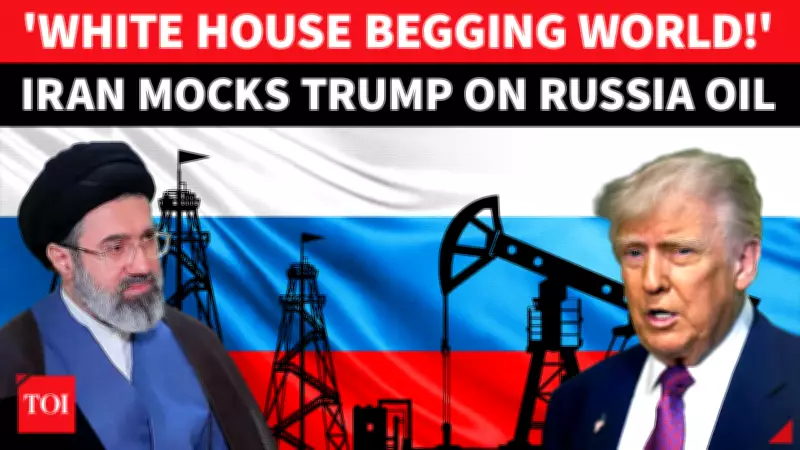
Iran's Diplomat Mocks US Over Russian Oil Sanctions Reversal
In a sharp diplomatic jab, Iran has publicly mocked the United States over its apparent reversal on Russian oil sanctions amid the escalating Middle East conflict. Senior Iranian official Abbas Araghchi highlighted what he described as Washington's contradictory stance, claiming the US had previously pressured India to halt purchases of Russian crude but is now urging global buyers—including India—to increase imports from Russia.
Global Energy Markets in Turmoil as Strait of Hormuz Shuts Down
The ongoing military confrontation between Iran, the United States, and Israel has effectively closed the strategic Strait of Hormuz, a critical maritime chokepoint through which approximately 20% of the world's oil and gas shipments normally pass. With tanker traffic halted due to security concerns, global energy supplies have been severely disrupted, creating what analysts fear could become one of the most significant energy crises in modern history.
The closure has triggered a dramatic surge in demand for Russian crude oil, providing Moscow with billions of dollars in additional revenue at a time when Western sanctions were intended to limit its financial resources. This unexpected windfall comes as major Middle Eastern producers, including Saudi Arabia, Iraq, and Kuwait, are simultaneously cutting production due to storage facilities reaching capacity.

Iran's 'Savage Jibe' at US Policy Inconsistency
Abbas Araghchi's comments, described by observers as a "savage jibe," specifically targeted what Iran perceives as American hypocrisy. "The White House is begging India," Araghchi reportedly stated, referencing Washington's earlier pressure campaign against New Delhi to reduce Russian oil imports following Moscow's invasion of Ukraine.
The Iranian official contrasted this with current US efforts to stabilize global energy markets by encouraging increased purchases of Russian oil—a policy shift necessitated by the Strait of Hormuz closure that has removed millions of barrels of Middle Eastern crude from international markets.
Broader Implications for Global Energy Security
The situation presents multiple challenges for global energy security:
- Russia benefits financially from increased oil sales despite ongoing sanctions
- Major Middle Eastern producers face storage limitations forcing production cuts
- Global oil prices experience extreme volatility
- Energy-dependent nations face supply uncertainty
- The conflict threatens to create long-term market disruption
As the military confrontation continues with no immediate resolution in sight, energy analysts warn that the world may be facing its most severe oil supply disruption since the 1970s oil crises. The closure of the Strait of Hormuz—through which nearly all oil exports from Saudi Arabia, Iran, Iraq, Kuwait, the United Arab Emirates, and Qatar typically flow—represents an unprecedented challenge to global energy infrastructure.
The Iranian comments highlight not only the immediate tactical situation but also the broader geopolitical realignments occurring in global energy markets, where traditional alliances and pressure campaigns are being tested by practical supply realities.