

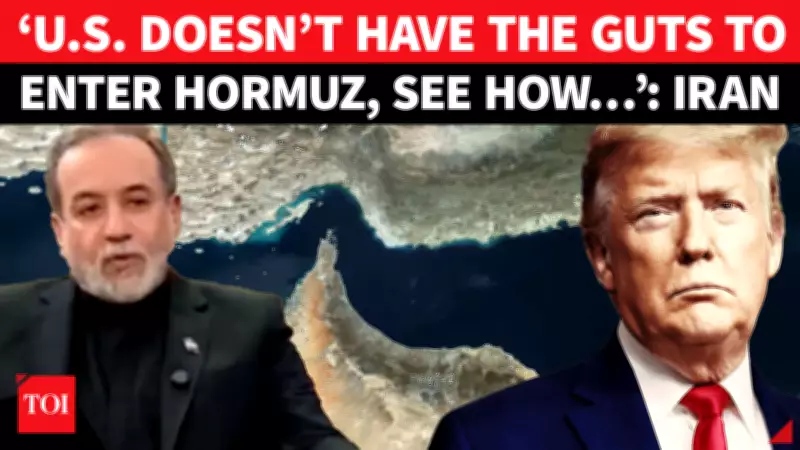
Iran's Defiant Stance on the Strait of Hormuz
In a bold and defiant declaration, Iranian Foreign Minister Abbas Araghchi has asserted that Iran now holds full authority over the strategic Strait of Hormuz, a critical global oil transit route. This statement comes amid escalating regional tensions and serves as a direct warning to the United States and other adversaries.
Araghchi's Warning to the United States
Araghchi emphasized that while the Strait of Hormuz remains open to friendly and neutral countries, it is effectively closed to Iran's enemies. He issued a stark caution against any military deployments into the region, stating that such actions would only heighten tensions and exacerbate the ongoing crisis. The minister specifically targeted the US, suggesting that foreign naval forces have refrained from entering the strait despite attempts to rally international support.
Global Underestimation of Iran's Resolve
The Iranian foreign minister accused global powers of underestimating Tehran's determination, claiming they believed Iran was "bluffing" until it demonstrated tangible control over the vital waterway. Araghchi highlighted that even the United States has struggled to formulate an effective response, underscoring Iran's perceived upper hand in the situation.

Safe Passage for Friendly Nations
Despite the warnings, Araghchi revealed that several nations have already sought Iran's assistance to ensure the safe passage of their vessels through the Strait of Hormuz. This indicates a pragmatic approach, where Iran is willing to cooperate with countries it deems non-hostile, thereby maintaining some level of maritime traffic while asserting its dominance.
Broader Regional Implications
This development has significant implications for global oil markets and international relations, as the Strait of Hormuz is a chokepoint for approximately one-fifth of the world's oil supply. Iran's assertive stance could lead to:
- Increased geopolitical instability in the Middle East.
- Potential disruptions to global energy supplies.
- Heightened risks of military confrontations in the region.
The situation remains fluid, with Iran positioning itself as a key player capable of influencing maritime security and economic stability through its control over this crucial passage.






