India's Diplomatic Balancing Act Amid Global Tensions
As international tensions escalate between the United States, Israel, and Iran, India finds itself at a critical diplomatic crossroads. Prime Minister Narendra Modi's recent meetings with chief ministers of various states underscore the nation's dual focus on domestic governance and global stability. This development highlights India's strategic positioning in a volatile geopolitical landscape, where it must navigate complex alliances while addressing internal priorities.
PM Modi's State-Level Engagements and Governance Focus
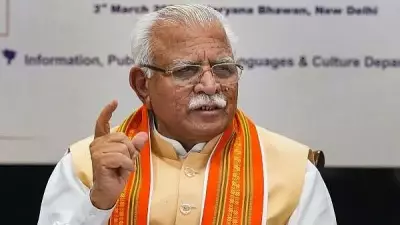
Prime Minister Modi convened a series of high-level discussions with chief ministers, emphasizing collaborative federalism and coordinated policy implementation. These meetings, held against the backdrop of global unrest, aimed to strengthen inter-state cooperation on key issues such as infrastructure development, economic growth, and social welfare schemes. The timing of these domestic engagements, amidst international crises, reflects India's commitment to maintaining governance continuity while monitoring external threats.
Key agenda items included:

- Reviewing progress on central government initiatives at the state level.
- Addressing regional disparities in development and resource allocation.
- Enhancing disaster management preparedness in light of global instability.
- Discussing strategies to boost agricultural productivity and rural employment.
India's Stance on the US-Israel-Iran Conflict
The escalating tensions between the United States, Israel, and Iran present a significant challenge for India's foreign policy. Historically, India has maintained diplomatic relations with all three nations, balancing strategic partnerships with the US and Israel while preserving energy ties with Iran. In this context, India's approach is characterized by cautious neutrality, advocating for peaceful resolution through dialogue and multilateral forums.
Analysts suggest that India's response will likely emphasize:
- Non-interference in the internal affairs of other nations, as per its traditional policy.
- Support for de-escalation measures to prevent regional spillover effects.
- Protection of Indian expatriate communities in the affected regions.
- Ensuring the security of maritime trade routes, crucial for India's energy imports.
Strategic Implications for India's Global Role
This confluence of events tests India's capacity to manage simultaneous domestic and international pressures. On one hand, the prime minister's state meetings demonstrate a focus on internal cohesion and development; on the other, the global conflict demands agile diplomacy to safeguard national interests. India's ability to maintain this balance could enhance its reputation as a responsible global actor, capable of contributing to peace while advancing its own socio-economic agenda.
The situation also underscores the interconnectedness of local and global affairs, where state-level governance in India must adapt to external shocks. As the world watches the US-Israel-Iran dynamics unfold, India's diplomatic maneuvers and domestic initiatives will be closely scrutinized for insights into its evolving role on the world stage.