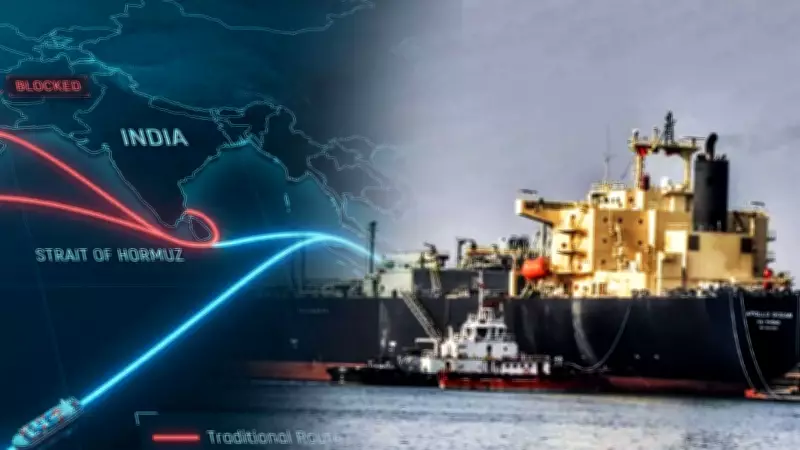
India Forges Strategic Path Through Hormuz Crisis As Global Diplomacy Hits Impasse
In a significant development amid escalating tensions in the Middle East, India has successfully implemented a new strategic shipping route to navigate the volatile Strait of Hormuz, ensuring the safe passage of its vessels through this critical global chokepoint. This tactical maneuver comes at a crucial time when international diplomatic efforts, particularly a United Nations resolution aimed at addressing maritime security threats, have encountered substantial resistance and stalled progress.
New Shipping Route Provides Temporary Breakthrough
The Indian government, in close coordination with its naval forces, has established an alternative maritime pathway that has already demonstrated its effectiveness. The successful transit of the tanker Green Sanvi through the troubled waters stands as a testament to India's proactive approach. This achievement represents more than just a logistical victory; it symbolizes India's commitment to maintaining uninterrupted trade flows and securing energy supplies vital for its 1.4 billion citizens.
"The priority remains unequivocal: keep our trade routes operational and ensure energy flows continue without disruption," emphasized a senior government official familiar with the strategic planning. This sentiment underscores India's pragmatic focus on national interests amid regional instability.

UN Resolution Faces Major Opposition
Concurrently, diplomatic efforts at the United Nations have reached a critical juncture. A resolution spearheaded by Bahrain, which sought to authorize stronger measures to protect shipping in the region, has lost significant momentum after encountering opposition from several influential nations. These countries have explicitly rejected provisions that would permit the use of military force, exposing deep-seated divisions within the international community regarding how to address maritime security threats.
This diplomatic deadlock at the global level contrasts sharply with India's operational successes on the ground. While world powers debate theoretical frameworks, India has taken concrete, calculated steps to safeguard its maritime interests. Every vessel movement through the new route is meticulously planned and continuously monitored by the Indian Navy, reflecting a balanced and pragmatic approach to crisis management.
Calculated Movements Amid Ongoing Risks
The situation remains precarious, with multiple commercial vessels still stranded in the region and security risks far from resolved. India's strategy involves not just route planning but comprehensive risk assessment and real-time intelligence gathering. The coordinated efforts between civilian shipping authorities and naval command centers ensure that each transit is executed with maximum safety protocols.
This crisis management approach demonstrates India's growing capability to navigate complex geopolitical challenges independently. While uncertainty dominates the broader regional landscape, India's methodical actions provide a measure of stability for its economic interests. The nation's ability to maintain steady progress while others remain entangled in diplomatic gridlock highlights its emerging role as a pragmatic actor in international affairs.
As the Hormuz crisis continues to evolve, India's dual-track approach—combining operational innovation with cautious diplomacy—positions it to weather the storm while protecting its vital national interests. The development of this new shipping route may serve as a model for other nations facing similar challenges in contested maritime regions.