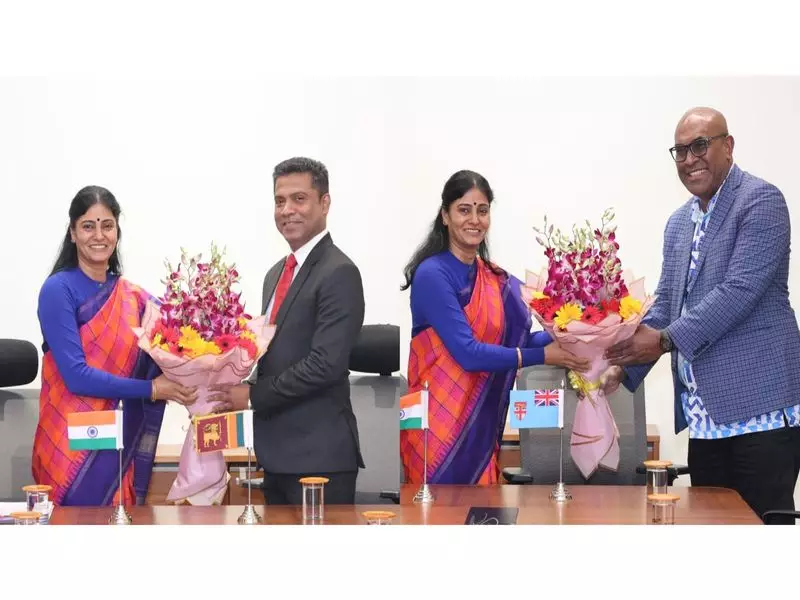
India's Minister of State for Commerce and Industry, Anupriya Patel, took centre stage in global health diplomacy this week, holding significant bilateral discussions with counterparts from Sri Lanka and Fiji. These high-level talks occurred on the sidelines of the prestigious 2nd WHO Global Summit on Traditional Medicine, hosted in Gandhinagar, Gujarat.
Strengthening Regional Partnerships in Healthcare
The meetings, held on August 18, 2023, focused on enhancing collaborative efforts in the health sector. With Sri Lankan Health Minister Keheliya Rambukwella, the dialogue revolved around a multi-faceted partnership. Key discussion points included capacity building for healthcare professionals, potential collaborations in the pharmaceutical sector, and the broader exchange of expertise in public health management. This engagement underscores India's 'Neighbourhood First' policy, extending its role as a reliable partner in regional well-being.
In a parallel meeting with Fiji's Minister for Health and Medical Services, Dr. Ratu Atonio Lalabalavu, the conversation took a more specific turn. Minister Patel highlighted India's strength in medical value travel and the robust infrastructure of its healthcare industry. She extended an invitation for Fiji to leverage India's capabilities in this domain, potentially easing the medical burden for Fijian citizens. The talks also explored avenues for cooperation in training and skill development for Fiji's medical personnel.

India's Leadership in Traditional Medicine on the Global Stage
The backdrop for these diplomatic exchanges was the summit itself, a major event co-hosted by the World Health Organization (WHO) and the Indian government. The gathering in Gandhinagar saw participation from over 90 countries, including G20 nations, highlighting the growing global interest in integrating traditional medicine into modern healthcare systems. India, with its rich heritage in systems like Ayurveda, Yoga, and other traditional practices, positioned itself as a key knowledge hub and leader in this movement.
Minister Patel's active participation and bilateral engagements served a dual purpose. Firstly, they advanced concrete health partnerships with individual nations. Secondly, they reinforced India's strategic commitment to promoting traditional medicine globally, a sector where the country holds significant cultural and economic capital. These discussions move beyond symbolism, aiming to create tangible frameworks for training, trade, and shared public health goals.
Implications for India's Global Health Diplomacy
The outcomes of these meetings are expected to have lasting impacts. For Sri Lanka and Fiji, closer ties with India could translate into improved healthcare training, access to affordable pharmaceuticals, and knowledge exchange. For India, these dialogues solidify its role as a net provider of health security and expertise in its immediate and extended neighbourhood.
By leveraging the platform provided by the WHO summit, India successfully blended its advocacy for traditional medicine with pragmatic bilateral cooperation. This approach not only fosters stronger international relationships but also opens doors for Indian healthcare services, pharmaceutical exports, and wellness tourism. The Gandhinagar summit, therefore, was not just a conference but a strategic node for India's health-focused foreign policy, with Minister Anupriya Patel playing a pivotal role in steering these crucial conversations.