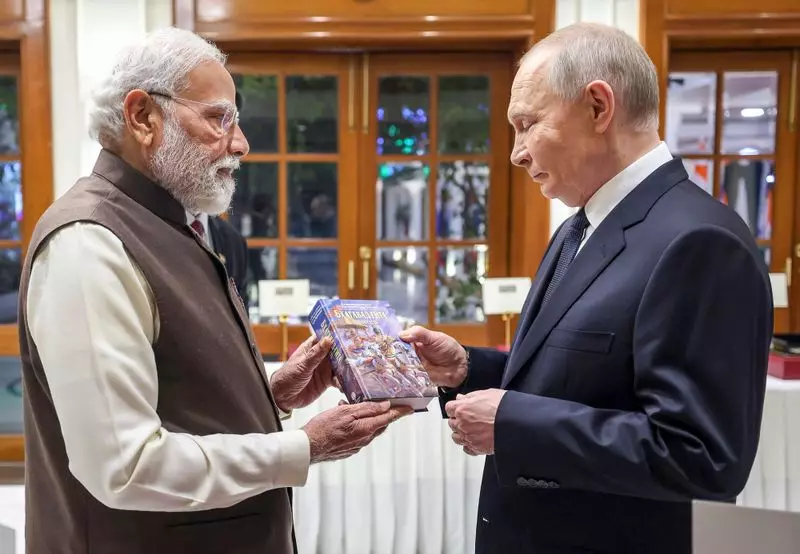
India's long-standing and complex relationship with Russia is undergoing one of its most significant tests in decades. The ongoing conflict in Ukraine has placed immense global pressure on New Delhi to distance itself from Moscow. However, India's foreign policy establishment continues to navigate this diplomatic tightrope with a clear focus on protecting its core national interests, a principle often described as strategic autonomy.
The Historical Bedrock of the Partnership
The foundations of the modern India-Russia relationship were laid during the Cold War era. The former Soviet Union was a reliable partner, providing crucial diplomatic support and veto power at the United Nations Security Council on issues vital to India, most notably Kashmir. This historical goodwill forms an enduring legacy that continues to influence bilateral ties today.
Beyond diplomacy, the partnership was cemented through a robust defence relationship. For decades, Russia has been India's primary supplier of military hardware, from fighter jets and tanks to submarines and missiles. This dependence is not merely transactional; it involves deep technology transfers, joint ventures like the BrahMos missile, and a complex ecosystem of spare parts and maintenance. Abruptly severing these ties would jeopardise India's military readiness and compromise its security posture.
The Ukraine War: A New Diplomatic Challenge
The Russian military action in Ukraine, which began in February 2022, created an unprecedented diplomatic quandary for India. Western nations, led by the United States and the European Union, imposed severe economic sanctions on Russia and launched a global campaign to isolate Moscow diplomatically.
India's response has been measured and nuanced. It has consistently refrained from publicly condemning Russia at the United Nations, choosing instead to abstain on key votes calling for condemnation. New Delhi has emphasised the need for dialogue and diplomacy to resolve the crisis. Simultaneously, Indian leaders, including Prime Minister Narendra Modi, have communicated directly with both Russian President Vladimir Putin and Ukrainian President Volodymyr Zelenskyy, advocating for a peaceful resolution.
This balanced stance has drawn criticism from some Western quarters but is rooted in a pragmatic assessment of India's interests. The primary objective has been to ensure the safety and evacuation of thousands of Indian students stranded in Ukraine, which was successfully achieved in the early stages of the conflict.
The Economic Dimension: Energy and Trade
An unexpected consequence of the Ukraine war has been a dramatic shift in the economic engagement between India and Russia. With Western sanctions cutting off traditional markets for Russian oil, India emerged as a major buyer of discounted Russian crude. This surge in energy imports provided India with significant economic relief amid rising global inflation and helped Russia find an alternative market for its key export.
This pragmatic move, while criticised by the West, was framed by India as a necessary step to secure affordable energy for its growing economy and to protect its citizens from soaring prices. The transaction was conducted in a manner that, according to Indian officials, did not violate any international sanctions. The trade relationship has since expanded beyond oil to include fertilisers and other commodities, highlighting the mutual economic benefits that have emerged from a difficult geopolitical situation.
Navigating the Future: Autonomy and Adaptation
The path forward for India's "Russia hand" is one of careful calibration. The relationship is no longer the exclusive partnership of the past. India has significantly diversified its defence procurement in recent years, strengthening ties with the United States, France, and Israel. It is also a member of important Western-led groupings like the Quad (with the US, Japan, and Australia).
However, completely abandoning the relationship with Moscow is not seen as a viable or desirable option. Russia remains a key partner in critical strategic areas, including nuclear energy and space cooperation. The challenge for Indian diplomacy is to maintain this vital partnership while managing expectations and pressures from its Western allies.
The core of India's approach remains its commitment to strategic autonomy—the right to make decisions based on its own national interest, free from bloc politics. As the global order continues to fragment, this principle will likely guide New Delhi's interactions with both Moscow and the West. The ultimate test will be India's ability to leverage its unique position to not only protect its interests but also to contribute, where possible, to global stability and peace.