Indian Navy's Covert Operation Safeguards Vital Oil Tankers in Hormuz Strait
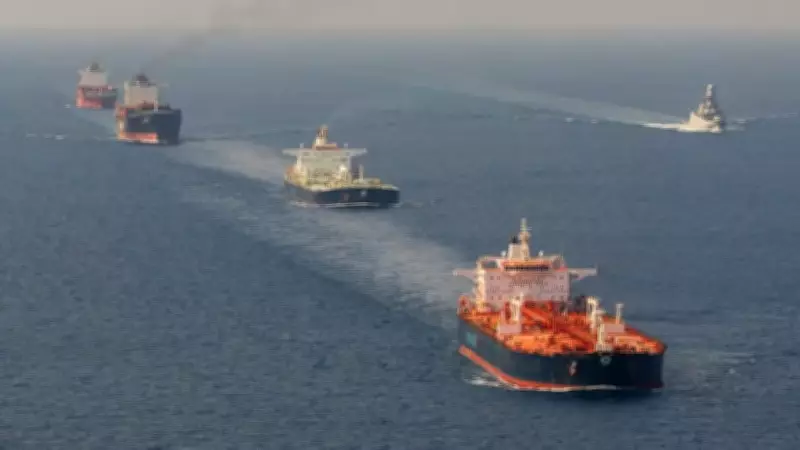
While the United States Navy declined to provide escorts for merchant vessels navigating the Strait of Hormuz and international discussions continued about the feasibility of former President Trump's proposed multinational coalition, India took decisive and independent action. The Indian Navy has successfully escorted two Shipping Corporation of India tankers, Shivalik and Nanda Devi, through the Persian Gulf, marking the first India-bound crossing in nearly two weeks.
Strategic Naval Deployment and Ongoing Operations
A third vessel, the Indian-flagged crude oil tanker Jag Laadki, was also being escorted out of the Gulf of Oman as of March 16, 2026. Currently, approximately 22 India-flagged vessels remain inside the Persian Gulf, with six more expected to depart in the coming days. The warships involved in this critical operation are believed to be Visakhapatnam-class guided missile destroyers—INS Surat, INS Imphal, and INS Visakhapatnam.
These represent India's most advanced indigenous destroyers, constructed under Project 15B at Mazagon Dock in Mumbai. They are equipped with formidable capabilities, including the ability to fire BrahMos cruise missiles and defend simultaneously against aerial, surface, and subsurface threats without reliance on any external partner. INS Surat had already been operational in the region, having made a port call in Bahrain in February 2026.

Operation Sankalp: A Sustained Maritime Presence
This operation is conducted under Operation Sankalp, which has maintained a continuous Indian naval presence in the Gulf since June 2019. Over the years, this initiative has safely escorted hundreds of merchant vessels carrying millions of tonnes of cargo, ensuring the security of India's maritime interests and energy supplies.
Iran's Foreign Minister subsequently confirmed that the strait remains open to vessels not associated with its adversaries, with India not categorized as hostile. This diplomatic context allowed India to leverage both its naval presence and back-channel diplomacy simultaneously, reinforcing its strategic autonomy.
India's Independent Stance Amid Global Tensions
India is expected not to join Trump's proposed multinational Hormuz coalition, preferring to operate independently under Operation Sankalp. This approach enables India to protect its ships, sailors, and energy supplies on its own terms, under its own flag, outside any alliance that could potentially draw it into conflicts it has carefully chosen to avoid.
The successful escort operation underscores India's commitment to maritime security and energy independence, navigating complex geopolitical waters with precision and discretion. As global powers debate coalition strategies, India's proactive and self-reliant measures highlight its growing naval prowess and diplomatic finesse in safeguarding national interests.