

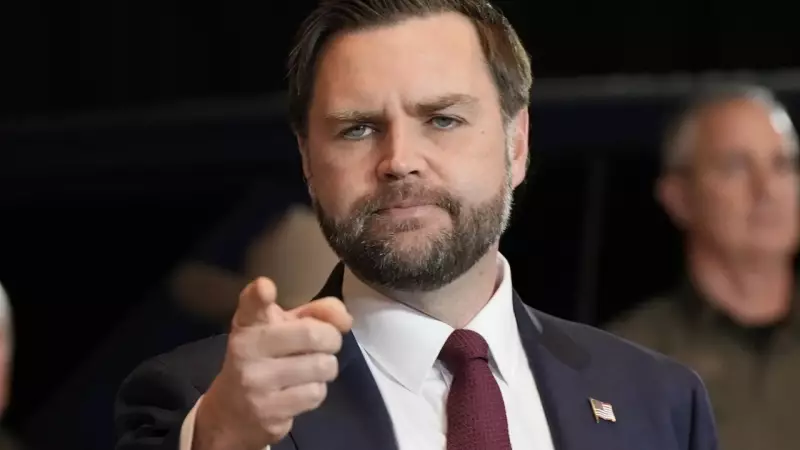
Indian-American business leaders have reacted with profound disbelief and disappointment following revelations that Vice President JD Vance, who is married to Indian-origin Usha Vance, has taken a firm stance against the proposed India-US trade agreement. This surprising development emerged during a private meeting with donors where Senator Ted Cruz disclosed details about the political battle surrounding the trade deal.
Political Revelation Sparks Community Backlash
During his address to donors, Senator Ted Cruz spoke extensively about his efforts to push the White House toward accepting a comprehensive trade agreement with India. When questioned about who was obstructing the deal's progress, the Republican senator specifically named economic adviser Peter Navarro, former President Donald Trump, and surprisingly, Vice President JD Vance.
The Indian-American Advocacy Council co-founder Sidharth expressed strong criticism of Vance's position, stating that the Vice President is essentially picking a fight with the Indian-American community. "Congratulations, you're turning one of America's most successful, pro-law, pro-merit communities into political enemies," Sidharth remarked. He further emphasized that this stance represents a form of self-sabotage that not only alienates a key demographic but also insults India, a crucial strategic partner with over 1.2 billion people who have largely shown respect for Trump and the Republican movement.

Community Leaders Question Vance's Motivations
Indian-American entrepreneur Ram Prasad offered a nuanced perspective on the different political figures involved in opposing the trade deal. While acknowledging that Trump and Navarro's opposition might be understandable within their political frameworks, Prasad found Vance's position particularly perplexing. "Vance scuttling it has no explanation other than his recently developed pretend hate towards Indians," Prasad commented. He suggested that Vance's stance appears designed to appease certain political factions at the expense of alienating both the Indian-American community and India itself.
The Indian lobby has characterized Vance's position as nothing short of self-sabotage, arguing that he is sacrificing long-term strategic relationships for short-term political gains. This development has created significant tension within political circles, particularly given Vance's personal connection to the Indian community through his marriage.
Tariff Developments and Economic Context
In related economic developments, Treasury Secretary Scott Bessent has signaled potential changes to the current tariff structure between the two nations. Bessent indicated that the additional 25% tariffs on India might be reconsidered, particularly as India's purchases of Russian oil have significantly decreased. "Indian purchases by their refineries of Russian oil have collapsed. So that is a success," Bessent noted during his remarks.
December data confirms that India's Russian oil imports have dropped to their lowest levels in two years, creating new opportunities for diplomatic and economic recalibration. This reduction in Russian oil imports comes as trade tensions between India and the United States escalated significantly in August when former President Donald Trump doubled tariffs on Indian goods to 50%, including implementing a 25% levy specifically in response to India's imports of Russian crude oil.
Broader Implications for US-India Relations
The revelation about Vice President Vance's opposition to the trade deal raises important questions about the future trajectory of US-India relations. As two of the world's largest democracies with increasingly intertwined economic interests, any disruption in trade negotiations carries significant consequences for both nations.
The Indian-American community, known for its substantial contributions to American business, technology, and academic sectors, finds itself caught in an unexpected political crossfire. Community leaders emphasize that this development could have lasting implications for political engagement and representation, potentially reshaping how Indian-Americans engage with both major political parties moving forward.

As discussions continue behind closed doors, the business community watches closely, hoping for resolution that recognizes the mutual benefits of strengthened US-India economic cooperation while addressing legitimate concerns on both sides of the negotiating table.





