The 18% Pivot: Delhi's Strategic Diplomacy with Trump
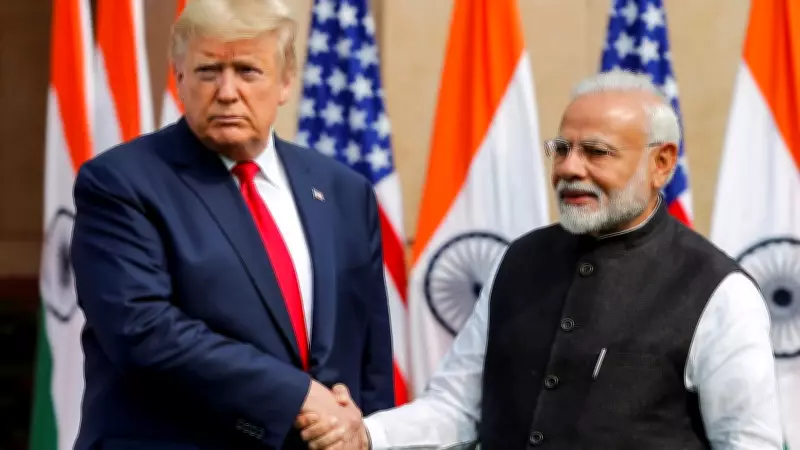
When Barack Obama characterized India-US relations as a "defining partnership of the 21st century," he envisioned a long-term bilateral framework. However, this assessment did not anticipate the rigorous stress-test that the relationship would undergo during the second Trump administration. The recent announcement of a trade deal between the two nations concludes a tumultuous phase that tested every aspect of their connection, from trade and defense to broader geopolitical dynamics.
Beyond the Announcement: Contours and Cautions
While the detailed provisions of the trade agreement await full disclosure, the preliminary announcements by both leaders outline its broad structure. Historical communication gaps between President Trump's statements and official Indian government positions should serve as a moderating influence, if not a complete deterrent, to premature conclusions. The reduction of reciprocal tariffs on Indian goods from 50 percent to 18 percent, coupled with the potential lifting of punitive 25 percent tariffs related to India's Russian oil purchases, could dramatically reposition India among the least-tariffed economies in the Indo-Pacific region.
This development places India ahead of regional competitors like Bangladesh, China, Indonesia, Pakistan, and Vietnam, all of which face higher tariff barriers. Following closely on the heels of the comprehensive agreement with the European Union, this shift appears, from India's perspective, as a strategic reward for maintaining firmness in negotiations with the United States while simultaneously advancing other trade partnerships.

Catalyst for Internal Reform and External Diversification
India has successfully concluded at least eight free trade agreements in recent years, with several more in development. In retrospect, Trump's assertive negotiating approach served as a catalyst, accelerating internal reforms and diversification strategies that extend beyond India-US relations into new geographical territories and enhanced economic resilience.
Several critical factors converged to facilitate this agreement:
- India's measured diplomatic restraint even when provoked
- Sustained economic growth despite tariff pressures
- Political determination to pursue domestic reforms alongside external diversification
- A strategic decision against retaliatory measures
- An unwavering commitment to maintaining open dialogue channels
An additional enabling element may have been the new US ambassador to India, who demonstrated immediate effectiveness and benefited from direct presidential trust.
Red Lines and Strategic Shifts
As the final details of the agreement emerge, key areas to monitor will include India's established boundaries in sensitive sectors such as agriculture and dairy, where New Delhi has historically demonstrated limited flexibility. President Trump's announcement regarding India halting oil purchases from Russia, if confirmed, would represent a substantial realignment of India's economic and energy priorities.
However, if there is one consistent lesson from India's negotiation history with the United States and its broader diplomatic experience, it is that no bilateral relationship functions solely in relation to another, particularly not a time-tested partnership like that with Russia.
Opportunity and Test: Rewiring the Relationship
At its core, the trade agreement with the United States represents both a significant opportunity and a substantial test. It provides an opportunity to fundamentally restructure the relationship and rebuild trust, a necessity that will likely drive future advancements in bilateral cooperation, especially in technology and defense sectors.
Governments often possess the capacity to accelerate trust-building more rapidly than societies can, particularly following recent disruptions in India-US relations. What remains concerning, however, is the persistent influence of domestic political dynamics in both nations.

Domestic Dynamics and Global Uncertainties
In the United States, the rise of conservative and nativist political currents is rapidly reshaping the nation's political trajectory. Meanwhile, in India, tariff measures implemented during the Trump administration significantly diminished favorable perceptions of the United States. While these setbacks are not irreversible, their resolution will depend heavily on external factors.
The trajectory of America's economic and military relationships with China and Russia, the outcome of the Russia-Ukraine conflict, the potential for another Middle Eastern confrontation involving the United States and Iran, and the unresolved situation in Gaza could all redirect the course of the world's most influential power.
A New Era in Bilateral Relations
One certainty emerges from these developments: The United States' tariff policies toward India, combined with India's demonstrated resilience, signal the beginning of a new era in bilateral relations. In this new phase, New Delhi is increasingly perceived as a future competitor rather than merely a partner in an asymmetric relationship requiring concessions.
When historical analysis identifies pivotal moments marking India's transformed engagement with Washington, the second Trump administration will likely stand prominently. This period represents not just a trade agreement but a fundamental recalibration of strategic positioning between two major democracies navigating complex global realities.