The Ministry of External Affairs has officially responded to recent statements made by US President Donald Trump regarding Pakistan's nuclear testing activities, strongly endorsing his characterization of these operations as illegal and secretive.
India's Official Response to Trump's Nuclear Remarks
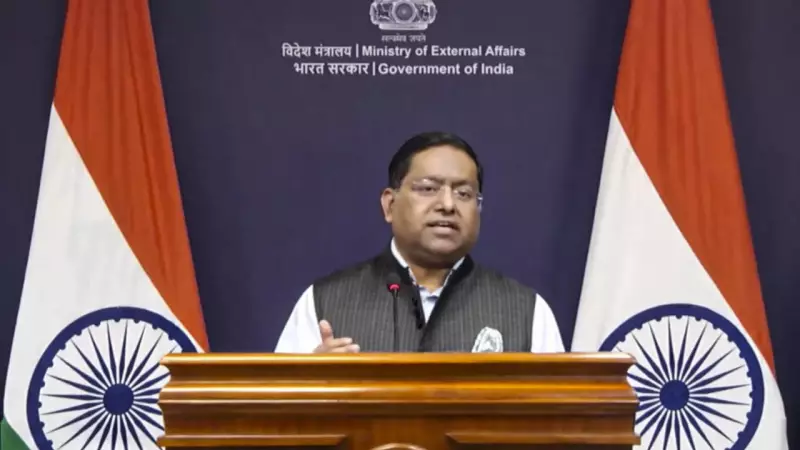
On Friday, the Indian government expressed its agreement with President Trump's assessment that Pakistan has been conducting nuclear weapons testing. Ministry of External Affairs spokesperson Randhir Jaiswal described these activities as "clandestine and illegal" during an official briefing.
Jaiswal emphasized that Pakistan's secret nuclear operations align with the country's historical pattern of behavior spanning several decades. "Clandestine and illegal nuclear activities are in keeping with Pakistan's history that is centered around decades of smuggling, export control violations, secret partnerships, AQ Khan network, and further proliferation," the spokesperson stated.

Background of Trump's Nuclear Testing Announcement
The diplomatic reaction came following President Trump's justification for resuming American nuclear testing after more than three decades of moratorium. Earlier this week, the US administration declared its intention to restart nuclear weapons testing, citing similar activities by other nations.
President Trump specifically mentioned multiple countries during his announcement. "Russia's testing and China's testing, but they don't talk about it. We're an open society. We're different. We talk about it because otherwise you people are going to report. They don't have reporters that are going to be writing about it," Trump explained.
The US President further elaborated: "We're going to test because they test and others test. And certainly North Korea's been testing. Pakistan's been testing." This direct reference to Pakistan's nuclear testing activities prompted the official response from Indian authorities.
India's Longstanding Concerns About Nuclear Proliferation
The Ministry of External Affairs used this opportunity to remind the international community about India's consistent position regarding Pakistan's nuclear record. "India has always drawn the attention of the international community to these aspects of Pakistan's record," Jaiswal affirmed.
Indian officials highlighted that Pakistan's nuclear activities have been a source of regional concern for many years. The reference to the AQ Khan network specifically points to the infamous nuclear proliferation network operated by Pakistani scientist Abdul Qadeer Khan, which had been involved in transferring nuclear technology to various countries.
Pakistan's secret and illegal nuclear activities are related to its ancient history, which has lasted for decades, Jaiswal added, reinforcing India's position that these concerns are not new but part of a long-standing pattern of behavior.
The development marks a significant moment in international nuclear diplomacy, with India aligning with US concerns about Pakistan's nuclear testing activities while the United States prepares to resume its own nuclear testing program after more than thirty years.