India and Israel Schedule Next FTA Negotiation Round for May 2026
The commerce ministry announced on Thursday that India and Israel will reconvene in May 2026 to continue negotiations on their proposed free trade agreement (FTA). The next round of in-person discussions is scheduled to take place in Israel, marking a significant step forward in bilateral trade relations.
First Round of Talks Concludes in New Delhi
This announcement follows the conclusion of the first round of four-day talks held in New Delhi. Officials described the discussions as comprehensive and wide-ranging, covering several crucial trade areas essential for a robust economic partnership.
"Both sides also agreed to continue inter-sessional engagements virtually. The next round of in-person negotiations will be held in May 2026 in Israel," the ministry stated, highlighting the commitment to ongoing dialogue.

Comprehensive Agenda on Trade and Investment
According to news agency PTI, the negotiations are addressing multiple key chapters, including:
- Trade in goods and services
- Rules of origin
- Sanitary and phyto-sanitary measures
- Technical barriers to trade
- Customs procedures
- Intellectual property rights
- Digital trade
In November last year, the two countries signed the terms of reference (ToR) to formally launch the negotiations. The ToR include provisions for market access for goods through the removal of tariff and non-tariff barriers, investment facilitation, simplified customs procedures, enhanced cooperation in innovation and technology transfer, and easing of norms to boost trade in services.
Under an FTA, countries typically reduce or eliminate import duties on most traded goods and relax regulations to encourage services trade and investments. India’s chief negotiator is Ajay Bhadoo, additional secretary in the department of commerce, while Israel’s side is led by Yifat Alon Perel, senior director for trade policy and agreements.
High-Level Political Support
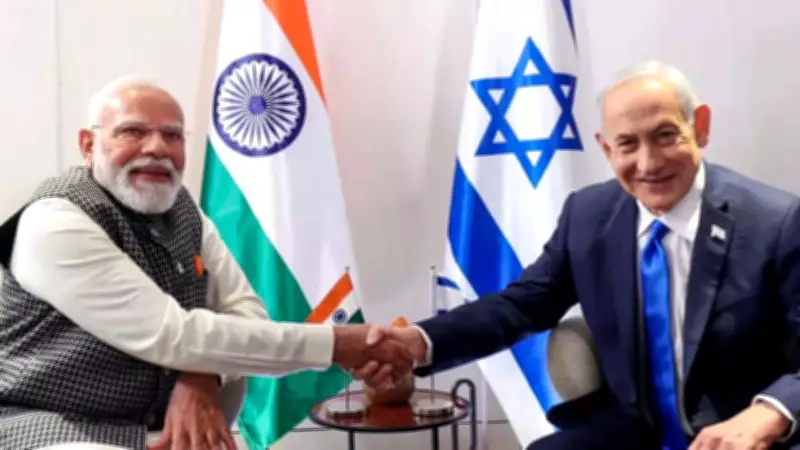
The talks have gained strong political backing at the highest level. During his recent state visit to Israel, Prime Minister Narendra Modi addressed a special plenary of the Knesset in Jerusalem on Wednesday and called for the early conclusion of an ambitious FTA to unlock untapped trade potential between the two nations.
Both countries have identified significant opportunities in sectors such as machinery, chemicals, textiles, agriculture, medical devices, and advanced technologies, underscoring the strategic importance of this agreement.
Recent Trade Figures Show Decline
Despite strong diplomatic ties, recent trade data reveals a notable dip. During 2024-25, India’s exports to Israel fell 52 per cent to $2.14 billion, down from $4.52 billion in 2023-24, according to PTI. Imports also declined by 26.2 per cent to $1.48 billion in the last fiscal year, bringing total bilateral trade to $3.62 billion.
India is Israel’s second-largest trading partner in Asia. Although merchandise trade is still dominated by diamonds, petroleum products, and chemicals, recent years have seen growing exchanges in electronic machinery, high-tech products, communication systems, and medical equipment.
India’s key exports include pearls and precious stones, automotive diesel, chemicals and mineral products, machinery and electrical equipment, plastics, textiles and apparel, base metals, transport equipment, and agricultural products. On the import side, India buys pearls and precious stones, chemical and mineral or fertiliser products, machinery and electrical equipment, petroleum oils, defence equipment, and transport machinery.
Talks Resume After Earlier Pause
This is not the first attempt to seal a trade pact. India and Israel had earlier held eight rounds of negotiations, with the last meeting taking place in October 2021. However, the talks stalled thereafter. The current round marks a renewed effort to conclude the agreement, reflecting a shared commitment to strengthening economic ties.

In September last year, the two sides also signed a Bilateral Investment Agreement (BIA). Under this pact, India reduced the local remedies exhaustion period for Israeli investors to three years from five years. Between April 2000 and June 2025, India received $337.77 million in foreign direct investment from Israel.
Israel, a high-income and technology-driven economy with a population of under 10 million, is seen as a strategic partner for India in innovation and advanced manufacturing. Officials on both sides believe that a well-structured FTA could significantly strengthen trade and investment flows in the coming years, paving the way for enhanced economic cooperation and mutual growth.