

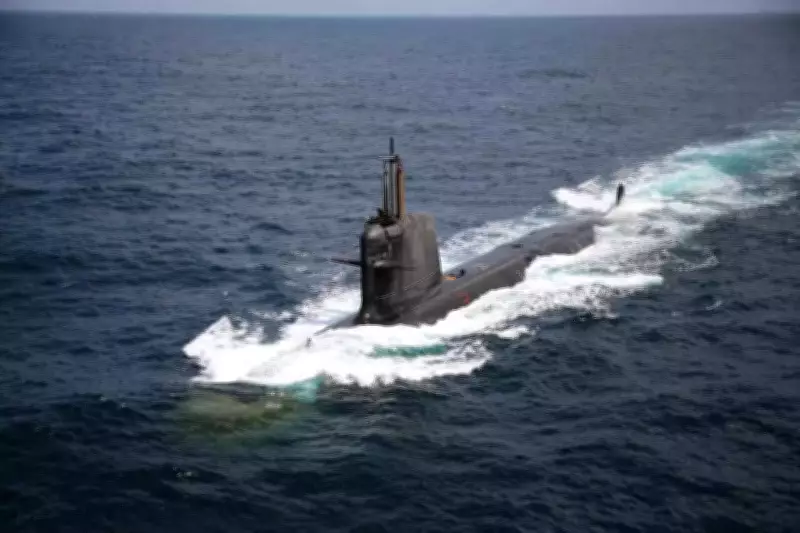
New Delhi: India and Germany are poised to finalize a monumental $8 billion agreement for the Project-75(I) submarine manufacturing program, marking a significant leap in bilateral defence cooperation. This deal, anticipated to be signed by the end of March as negotiations have progressed to an advanced stage, is set to become India's largest-ever defence contract, surpassing the Rs 58,000-crore Rafale jet agreement with France from 2016.
Addressing Naval Modernization Needs
The long-pending Project-75 India (P-75I) initiative is designed to tackle the critical issue of India's ageing conventional submarine fleet. By enhancing the Indian Navy's underwater capabilities, it aims to strengthen maritime deterrence in the Indo-Pacific region, where both China and Pakistan are increasingly expanding their presence in the Indian Ocean Region. The program is estimated to cost India between Rs 70,000 crore and Rs 72,000 crore, equivalent to approximately $8 billion.
Advanced Submarine Technology and Construction
The agreement involves the construction of six advanced, conventional diesel-electric attack submarines, specifically the Type-214 Next-Generation models. These submarines are renowned for their proven, fuel-cell-based air-independent propulsion (AIP) technology, which allows them to remain submerged for weeks instead of just a few days. This capability significantly reduces detection risks, providing a strategic advantage in underwater operations.

In a collaborative effort under the strategic partnership model, Mazagon Dock Shipbuilders Ltd (MDL) will partner with Germany's ThyssenKrupp Marine Systems (TKMS) to build these submarines domestically. The project targets 45-60% indigenisation, aligning with the 'Make-in-India' initiative to boost local manufacturing and technological self-reliance.
Historical Context and Recent Developments
The procurement of six submarines under Project 75I was initially approved by the defence acquisition council in October 2014. Subsequently, the defence ministry issued a formal request for proposal (RFP) for the construction of these AIP-fitted conventional submarines on July 20, 2021. The proposed agreement reportedly gained momentum during the India visit of German Chancellor Friedrich Merz on January 12 and 13, and may include technology transfer for submarine production, further enhancing India's defence manufacturing capabilities.
Current Naval Fleet and Indigenisation Efforts
The Indian Navy currently operates a fleet that includes about a dozen Russian submarines and six new French-made models. This new deal is part of broader efforts to implement the Indian naval indigenisation plan for 2015–2030. Under this plan, 51 large ships are already under construction in the country, with an approximate value of Rs 90,000 crore. Since 2014, Indian shipyards have delivered over 40 indigenous warships and submarines to the Navy, with an average induction rate of one new vessel every 40 days in the past year.
Economic and Industrial Impact
Beyond bolstering defence capabilities, the Project-75(I) submarine initiative is expected to have a profound impact on India's industrial sector. It will not only aid in boosting the core submarine and shipbuilding industry but also greatly enhance the manufacturing landscape, particularly for Micro, Small, and Medium Enterprises (MSMEs). The development of an industrial ecosystem for manufacturing associated spares, systems, and equipment related to submarines will create jobs and drive technological advancements, contributing to overall economic growth.
This historic agreement underscores India's commitment to modernizing its defence infrastructure while fostering international partnerships and promoting domestic production under the 'Make-in-India' banner.






